

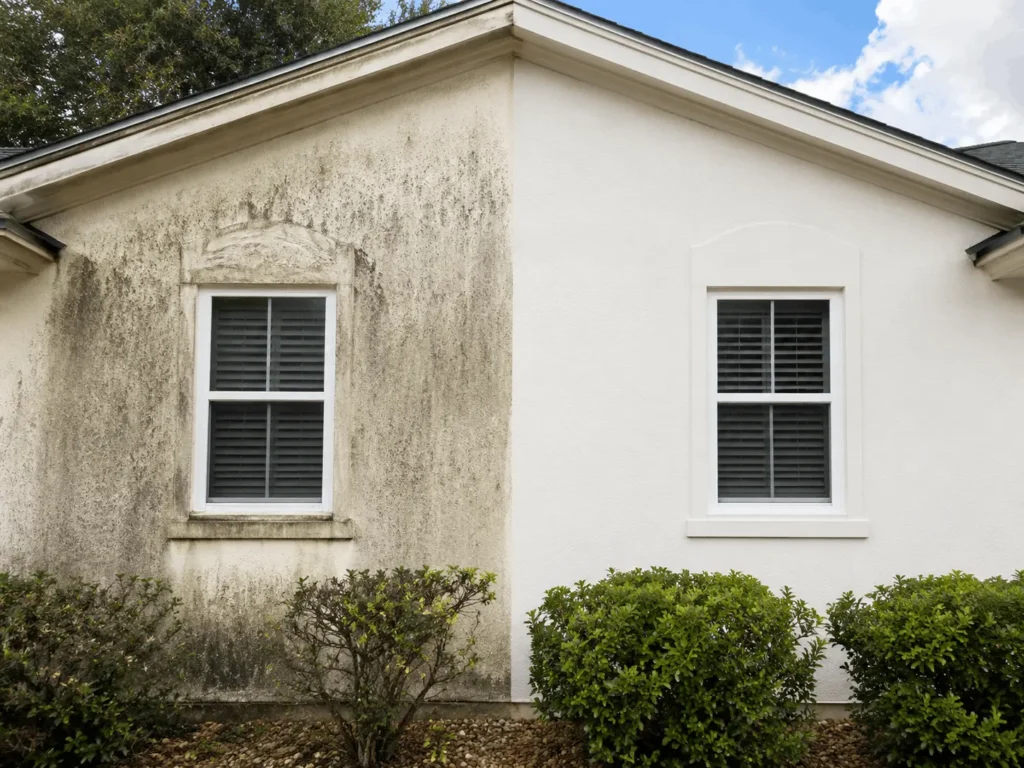
Mold and mildew on exterior walls are a common problem for homeowners in San Antonio, where heat, humidity, and seasonal rain create the perfect conditions for growth. What may start as a few dark spots on your siding, stucco, or brick can quickly spread, affecting your home’s appearance and potentially causing long-term surface damage.
The good news is that mold and mildew can often be removed with the right cleaning methods and preventative maintenance. In this guide, we’ll explain how to safely remove mold from exterior walls, what causes it to grow, and how to keep it from returning.
Why Mold and Mildew Grow So Easily on Homes in San Antonio?
San Antonio sits in a humid subtropical zone. Mornings often start near 80% humidity, and summer highs regularly push past 95 degrees. That combination of heat, moisture, and shade is exactly what mold, mildew, and green algae need to grow.
Homes near the San Antonio River or shaded lots close to Brackenridge Park tend to see growth faster because the air stays damper longer under tree cover. North-facing walls and areas behind bushes are the most common trouble spots because they dry out slower after rain.
Signs You Have Mold or Mildew on Your Exterior Walls
Before you grab a hose, confirm what you are dealing with. Look for these signs:
- Black, green, or gray-green splotches on siding, brick, or stucco
- A musty smell near exterior walls, especially after rain
- Streaky, slimy patches on north-facing or shaded walls
- Spots that spread wider every few weeks
If you see any of these, the growth needs to come off soon. Left alone, it eats into paint and siding material over time.
Difference Between Mold, Mildew, and Algae
These three often get lumped together, but they behave a little differently:
- Mold is usually black, blue-green, or gray and can look fuzzy or slimy.
- Mildew is a type of mold that shows up as a flat, powdery gray or white coating.
- Algae looks green or gray-green and gives walls a streaky, slick appearance, especially on the shaded side of a house.
The cleaning approach below works for all three.
How to Remove Mold From Exterior Walls?
Follow these steps for a safe, effective clean on brick, stucco, or fiber cement siding.
Step 1: Gather Your Supplies
You will need rubber gloves, safety goggles, a stiff outdoor brush, a garden hose, and a cleaning solution. Skip the ladder and work on tall walls. That job is safer left to a pro with the right equipment.
Step 2: Mix a Safe Cleaning Solution
Mix one cup of oxygen bleach or household bleach into one gallon of water. Never mix bleach with ammonia or other cleaners, since this creates dangerous fumes. Test the solution on a small hidden spot first.
Step 3: Apply, Scrub, and Rinse
Spray or brush the solution onto the moldy area and let it sit for 10 to 15 minutes. Scrub gently with the brush, working in small sections. Rinse thoroughly with clean water from the top down.
Step 4: Protect Plants and Pets
Wet down nearby plants before you start and rinse them again after. Bleach solutions can harm grass and flower beds if they run off without dilution.
How to Remove Mildew From House Siding
Different siding materials need slightly different care:
- Vinyl siding: A soft brush and the bleach solution above work well. Avoid abrasive scrubbers that scratch the surface.
- Stucco: Stucco is porous and absorbs moisture, so mildew can run deeper than it looks. A longer soak time with a gentle brush usually does the trick.
- Brick: Brick and mortar can trap mildew in tiny pores. A stiffer brush and a slightly longer contact time help lift it out.
If mildew keeps returning on the same wall, no matter how often you clean it, that is usually a sign of a bigger moisture or shade problem that scrubbing alone will not fix.
Power Washing Mold Off Your House: What to Know?
Scrubbing by hand works for small spots, but a full wall covered in mold or algae calls for more power. A professional power washing service uses controlled water pressure to strip mold, algae, and grime off siding, stucco, and brick without damaging the surface underneath.
DIY pressure washers sold at hardware stores can actually cause damage if the pressure is set too high or held too close to the wall. Too much pressure can crack stucco, strip paint, or force water behind siding, which leads to a whole new moisture problem. That is the main reason homeowners in San Antonio often bring in a trained crew instead of renting equipment for a one-time job.
Ready to get your walls looking new again? Get a free power washing estimate and skip the guesswork.
How Often Should You Clean San Antonio Exterior Walls?
Because of the local humidity, most San Antonio homes benefit from an exterior wash once a year. Homes in shaded areas, near Alamo Heights tree cover, or close to sprinkler overspray may need it every 6 to 9 months. Check out this guide on how often to power wash your home for a schedule based on your specific property.
Preventing Mold and Algae From Coming Back
A clean wall will not stay clean forever without a few habits in place.
- Trim bushes and trees so walls get more sun and air movement
- Clean gutters twice a year so water does not run down siding
- Point sprinklers away from the house
- Repaint with mold-resistant exterior paint after a deep clean
A fresh, well-maintained exterior also holds up better against San Antonio’s heat and storms. You can read more about the benefits of power washing if you want to see the full list of reasons regular cleaning pays off.
Even homeowners out in the Boerne Hill Country deal with the same seasonal buildup, so this routine applies well beyond the city limits too.
If your walls have not been cleaned in over a year, now is a good time to check. Learn more about why San Antonio homes need power washing to see how it protects your home’s value.
Why Choose River City Painting?
River City Painting has spent more than 5 years helping San Antonio homeowners keep their houses clean, protected, and looking great. With over 260 five-star Google reviews, the team has built its reputation on careful work and clear communication from the first estimate to the final walkthrough.
Beyond power washing, River City Painting offers comprehensive services to keep your home looking its best. That includes interior painting, exterior painting, cabinet painting, fence and deck painting, door painting, drywall repair, and deck staining.
River City Painting works with both homeowners and businesses, offering commercial painting and residential painting services across San Antonio and the surrounding Hill Country. The team regularly serves Alamo Ranch, Alamo Heights, Boerne, and Blanco, along with many more nearby communities. You can see the full list of service areas to check if your neighborhood is covered.
Ready to get mold and mildew off your walls for good? Request your free estimate and let River City Painting bring your home’s exterior back to life.
Conclusion
San Antonio’s heat and humidity make exterior mold and mildew a regular problem for local homes. Small spots can often be handled with a simple bleach solution, a brush, and some care around plants. Larger areas, tall walls, or growth that keeps returning usually call for professional power washing to clean the surface safely and thoroughly. Regular cleaning, good sun exposure, and a fresh coat of mold-resistant paint go a long way toward keeping walls clear for good.
Frequently Asked Questions
Yes, small mold spots on exterior walls can often be removed with a bleach and water solution, a stiff brush, and careful rinsing.
Power washing mold off house exteriors is safe for stucco and brick when the pressure and nozzle are set correctly for that surface.
Most San Antonio homes should be power washed once a year, though shaded or humid properties may need it every 6 to 9 months.
A bleach or oxygen bleach solution kills visible mold on siding, but pairing that with better sun exposure and drainage stops it from coming back.
Exterior mold that keeps returning on the same wall usually means shade, sprinklers, or poor drainage are keeping that area damp longer than it should be.