

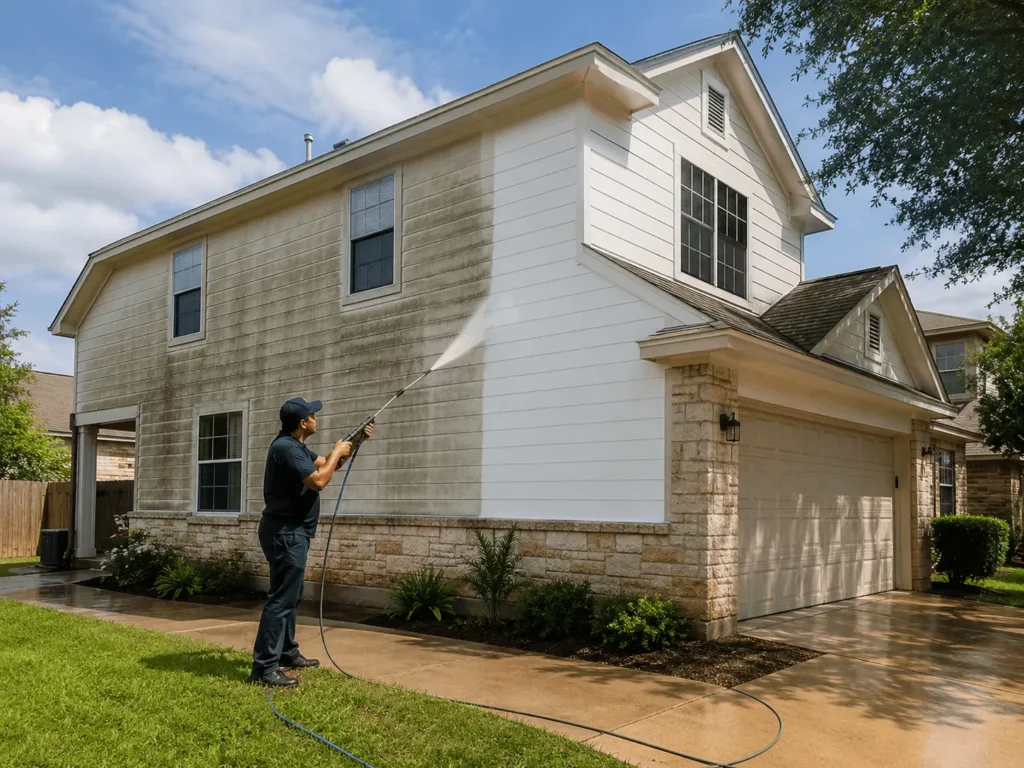
Your home in San Antonio deals with intense weather every year. NOAA / National Weather Service climate normals show San Antonio gets about 122 days a year at or above 90°F, along with more than 32 inches of annual precipitation. That mix of heat, humidity, storms, dust, mildew, and sun exposure can leave dirt and chalky paint film on siding, stucco, brick, and trim.
That buildup matters before painting. Sherwin-Williams notes that up to 80% of coating failures can be linked to poor surface preparation, which means paint may peel early if it goes over grime instead of a clean surface. So yes, you should pressure wash before painting your house in San Antonio, but the real question is how to do it the right way.
Why Pressure Washing Is Essential Before Painting Your Home
Paint needs a clean surface to stick. Dirt, pollen, spider webs, and mildew act like a barrier between your siding and the new paint. Even a light layer of dust can stop paint from bonding well.
A proper wash removes:
- Dirt and pollen buildup
- Mold and mildew are common in humid San Antonio summers
- Chalky, old paint residue
- Cobwebs and bug debris around eaves and window trim
Skip this step, and your new paint may bubble, peel, or fade years before it should.
How Long to Wait After Pressure Washing Before You Paint
This is the part homeowners get wrong most often. Painting too soon traps moisture under the new coat.
- Wood siding and trim: Wait 48 to 72 hours. Wood soaks up water and needs the longest dry time.
- Vinyl siding: Wait at least 24 hours. Vinyl does not soak up water, but it still needs to fully air dry.
- Stucco: Wait a full 48 hours or more. Stucco is common in San Antonio and holds water deep in its texture.
- Brick and masonry: Wait 24 to 48 hours, depending on humidity.
In San Antonio’s summer heat, surfaces often dry faster on sunny days. In humid or overcast weather, add extra time.
Quick Way to Check If Your Siding Is Dry
Tape a small piece of clear plastic wrap over a section of the wall. Leave it for a few hours. If you see water droplets under the plastic, the surface is still wet. Wait longer before you paint.
Pressure Washing vs Soft Washing: Which One Do You Need
Not every surface should get the same treatment.
- Soft washing uses low pressure with a gentle cleaning solution. It is the safer choice for painted wood, vinyl, and stucco.
- Pressure washing uses higher force. It works well on brick, concrete, and other tough surfaces that can handle it.
Using too much pressure on soft siding can strip paint, force water behind the boards, or crack old caulking. This is why hiring a trained team for power washing services in San Antonio, TX matters. The right pressure and technique protect your home instead of damaging it.
Thinking about a fresh coat this season? Get a free estimate and we will tell you exactly what your home needs before painting.
How to Prepare a House for Exterior Painting
A clean wash is only step one. Full prep for a lasting paint job includes:
- Wash the exterior to remove dirt, mildew, and chalk.
- Let it dry fully based on your siding type.
- Scrape and sand any loose or peeling paint.
- Repair damaged wood or drywall before priming.
- Caulk gaps around windows, doors, and trim.
- Prime bare spots so paint has an even base.
If your walls need repair work first, our team also handles drywall repairing for homes, so your surface is smooth and ready before any paint goes on.
Common Mistakes Homeowners Make
- Painting the same day as the wash
- Using a rented pressure washer at too high a setting
- Ignoring shaded, damp areas that dry more slowly
- Skipping the wash completely to save time
- Forgetting to check the weather forecast before painting
Each of these mistakes can shorten the life of your paint job by years.
Why Hire a Professional Instead of Doing It Yourself
A rented pressure washer feels like an easy fix. But high pressure in the wrong hands can crack siding, break window seals, or push water into your walls. A professional team knows the right pressure, angle, and cleaning solution for every surface, from wood fences to stucco walls.
Why Choose River City Painting
River City Painting has served San Antonio homeowners for over 5 years, earning more than 260 five-star reviews on Google along the way. We handle every step of your project, from exterior painting and interior painting to cabinet painting, fence and deck painting, and deck staining.
Our team also takes care of the prep work that most homeowners skip, including thorough house washing, door painting, and drywall fixes, so your new coat goes on clean and smooth. We work with both homeowners and businesses, offering commercial painters and residential painting services built around your schedule.
We proudly serve families across the greater San Antonio area, including Alamo Ranch, Alamo Heights, Boerne, and Blanco. Check our full list of service areas to see if we cover your neighborhood.
Ready to see the difference proper prep makes? Request your free estimate today and let our team walk you through the process.
Conclusion
Pressure washing before painting is not a skip if you want to step. It is the foundation of a paint job that lasts. Clean the surface, give it time to dry, fix any damage, and then paint. That order keeps your new color looking sharp for years instead of months.
FAQs
Yes, always wash first so paint can bond to a clean surface.
Wait 24 to 72 hours, depending on your siding material and the weather.
Yes, if the pressure is too high, soft washing is safer for painted wood and vinyl.
The paint will peel or bubble early because it cannot bond to dirt or chalk.
Yes, a pro knows the right pressure and method to avoid damage.