

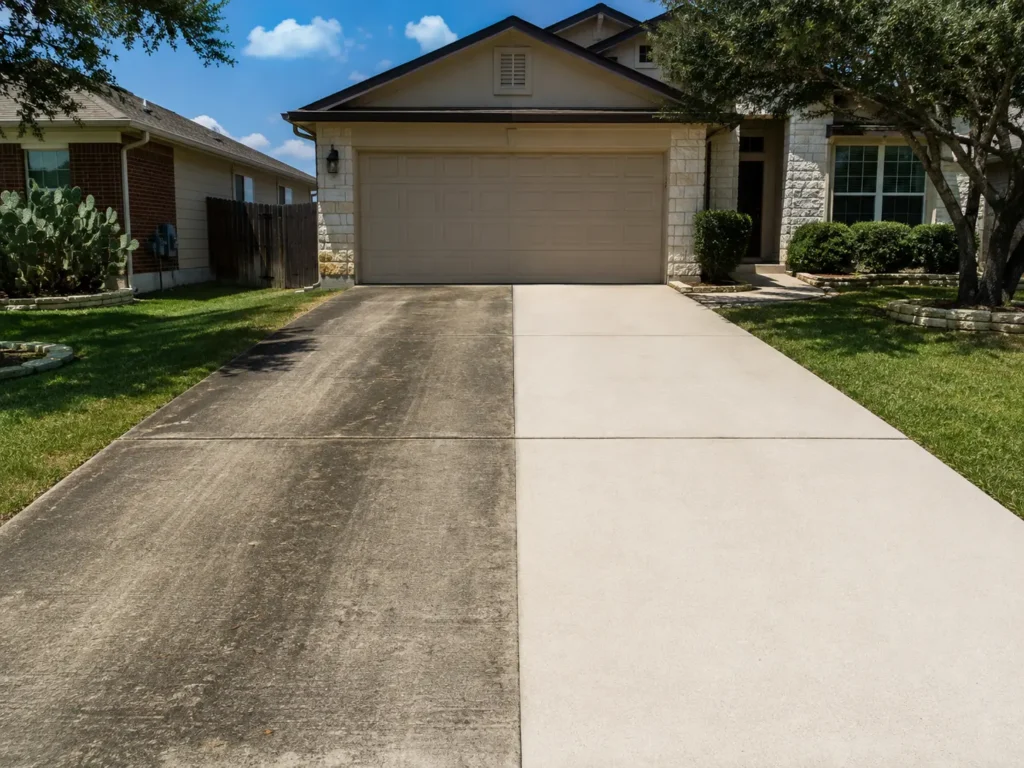
Black streaks on your driveway or sidewalk are almost always caused by a living organism called Gloeocapsa magma, a type of algae that feeds on moisture and the limestone in concrete. This same organism is behind the dark streaks seen on millions of roofs and driveways across the country, and researchers have tracked its spread across the U.S. for over 20 years as humidity levels rise in many regions. In San Antonio, our hot days, sudden summer storms, and humid nights create the perfect home for it.
The good news is that once you know what causes it, getting rid of it is simple.
What Causes Black Streaks on Your Driveway and Sidewalk
Black streaks are not just dirt that will wash away with a garden hose. They come from a few specific sources, and knowing which one you have helps you pick the right fix.
Algae and Mold Growth
Most black streaks come from algae or mold. These tiny organisms land on your concrete as spores floating in the air. Once they find a damp, shaded spot, they grow fast. Concrete is porous, so it soaks up rain and holds moisture in tiny pockets. That trapped moisture is exactly what algae needs to spread.
Humidity and Heat in San Antonio
San Antonio summers bring high heat mixed with sudden bursts of humidity, especially after a storm rolls through neighborhoods near the Riverwalk or Brackenridge Park. That mix of warmth and moisture speeds up algae growth on any concrete surface that does not dry out quickly.
Shade From Trees and Structures
Driveways and sidewalks under large oak trees or shaded by a house rarely get full sun. Without direct sunlight to dry the surface, moisture lingers for hours after rain or sprinkler use. Shaded concrete almost always shows black streaks first.
Tire Marks and Vehicle Fluids
Not every black mark is biological. Tire rubber can leave dark streaks where cars turn or brake. Oil, transmission fluid, and other vehicle leaks also leave black or dark brown spots, usually right where a car is parked most often.
Rust From Metal Objects
Rust stains can look black from a distance but usually carry a reddish or orange tint up close. These come from patio furniture, sprinkler heads, fences, or tools left sitting on the concrete.
Poor Drainage and Standing Water
If water pools on your driveway after rain instead of draining away, that standing water feeds algae and mold. Cracked concrete, low spots, and clogged gutters near your driveway all make this worse.
Are Black Streaks on Concrete Harmful
Black streaks are more than a cosmetic problem. Here is why they matter.
- Slip risk. Algae makes concrete slippery when wet, which is a real hazard for kids and older family members.
- Curb appeal. Buyers and neighbors notice a stained driveway before anything else about your home’s exterior.
- Long-term damage. Left alone, algae and mold can slowly wear down the surface of your concrete over time.
- Spreading. Algae spores travel by wind and water runoff, so one patch can spread to your sidewalk, patio, or even nearby siding.
The U.S. Environmental Protection Agency confirms that mold and algae need moisture to grow, which is exactly why shaded, damp concrete surfaces are the most common trouble spots.
How to Remove Black Streaks From Your Driveway
You have a few options depending on how bad the staining is.
DIY Cleaning Methods
- Dish soap and water. Works for very light, fresh streaks only.
- Vinegar solution. Can lighten mild algae spots but will not kill deep roots.
- Store-bought concrete cleaner. Helps with surface stains but rarely removes older buildup.
- Rented pressure washer. Can work, but the wrong PSI or nozzle angle can etch or damage your concrete.
Why Professional Cleaning Works Better
A professional cleaning uses the right pressure, the right nozzle, and cleaning solutions made to kill algae at the root, not just blast away what you can see. This means the stains take longer to come back. If your driveway or sidewalk has heavy, older staining, a concrete driveway cleaning done by a trained team will save your concrete from damage while giving you a deeper clean than a rental machine ever could.
Ready to get your driveway looking new again? Get a free estimate and see what a professional clean can do.
How to Keep Black Streaks From Coming Back
Cleaning is only half the job. These steps help slow down regrowth.
- Trim back tree branches so more sunlight reaches your driveway and sidewalk.
- Clear leaves and debris regularly, since organic matter feeds algae and mold.
- Fix drainage problems so water does not pool near your entryway or garage.
- Move planters and metal furniture off bare concrete to avoid rust and trapped moisture.
- Schedule routine sidewalk pressure washing service every six to twelve months, especially for shaded areas.
- Consider sealing your concrete after cleaning to make it harder for algae to take hold again.
According to the Concrete Network, discoloration on concrete can come from a wide mix of causes, which is why a proper cleaning and prevention plan matters more than a one-time scrub.
Why Choose River City Painting
River City Painting has over 5 years of experience helping San Antonio homeowners maintain beautiful, well-kept properties, backed by 260+ five-star Google reviews. From power washing driveways and sidewalks to residential painting, exterior painting, and deck staining, our team handles all your exterior needs with care. Whether you need professional concrete driveway cleaning or a complete exterior refresh, we deliver reliable, high-quality results.
Not sure if it is algae, rust, or something else? Request a free estimate and let our team take a look.
Conclusion
Black streaks on your driveway or sidewalk almost always come down to algae, moisture, shade, or a mix of all three. San Antonio’s heat and humidity make it a common problem, but it is one you can solve with the right cleaning approach and a little upkeep afterward. Catching it early keeps your concrete safer, cleaner, and easier to maintain for years to come.
Frequently Asked Questions
Bleach can lighten some stains but often does not kill algae at the root, so it usually comes back.
Most homeowners need a cleaning every six to twelve months depending on shade and rainfall.
Yes, over time algae and mold can wear down the surface if left untreated.
Yes, when done at the correct PSI and nozzle setting for concrete, it is safe and effective.
Often yes, though algae, rust, and tire marks can look similar and need different treatments.