

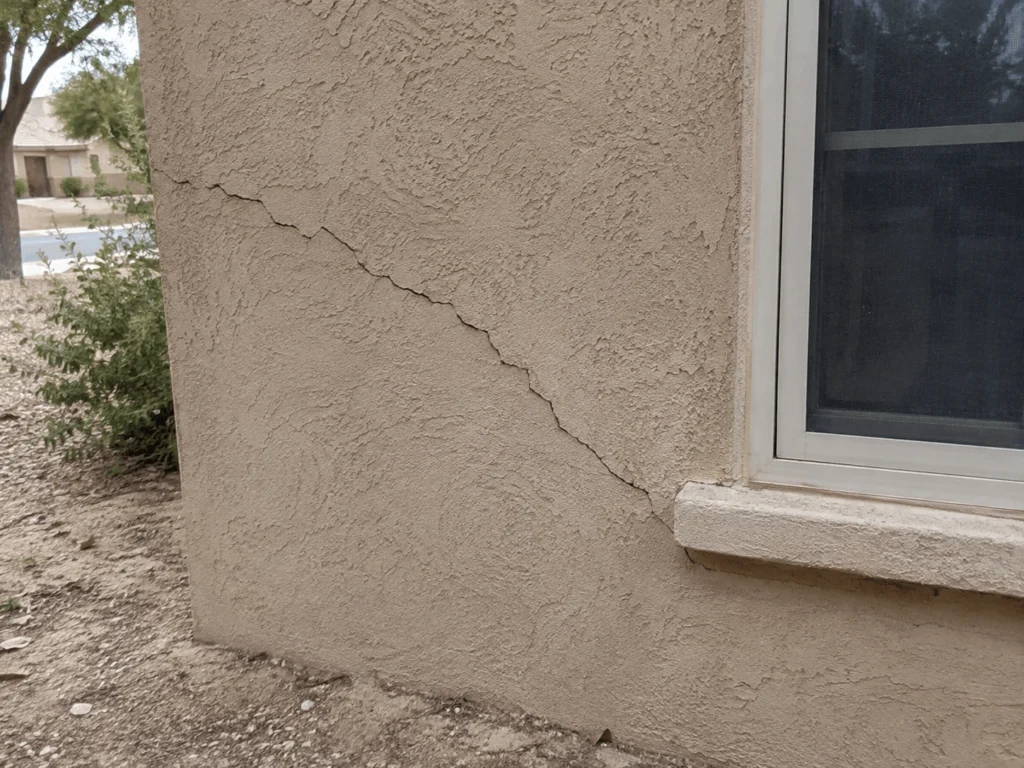
San Antonio’s caliche soil can cause stucco to crack because it expands and contracts with changes in moisture, creating movement in the foundation and walls above it. As the stucco shifts, cracks can form and return even after they are covered with fresh paint. Paint may hide minor surface imperfections, but it cannot correct the underlying movement or repair damaged stucco, which is why proper crack repair and surface preparation are necessary for a lasting finish.
This is one of the most overlooked reasons stucco keeps cracking across San Antonio. Most homeowners blame old age or bad paint. The real cause is often right under their feet.
The Texas Department of Insurance and local soil surveys have long noted that large parts of Bexar County sit on caliche and expansive clay layers, which are known to cause foundation movement in homes across Central Texas. This is not a rare problem. It is a regional one.
In this guide, you will learn:
- What caliche soil is and why San Antonio has so much of it
- How soil movement turns into stucco cracks
- Why repainting alone will not solve the problem
- The correct repair order before you ever pick up a paint brush
What Caliche Soil Is and Why It’s Common in San Antonio?
How Caliche Forms and Where It’s Most Prevalent Locally
Caliche is a hard, chalky layer of soil. It forms when calcium carbonate builds up in the ground over a long time. Rain washes minerals down. The minerals settle and harden. Over many years, this creates a cement-like layer under the topsoil.
San Antonio sits on a mix of limestone and caliche-rich soil. This is common in areas near the Hill Country edge, including neighborhoods around Stone Oak, Alamo Heights, and parts of the Northwest Side. Builders often hit this hard layer when digging foundations.
Why It Behaves Differently From Typical Clay Soil
Caliche is hard when dry. But it is not stable. It still absorbs water, just slower than clay. When it finally does absorb water, it can shift in an uneven way. Some parts of the foundation stay firm. Other parts sink or lift slightly.
This uneven movement is worse than steady, even movement. It puts twisting pressure on a foundation. That twisting pressure is what usually cracks stucco walls.
How Soil Movement Leads to Stucco Cracking?
Foundation Shift Patterns Tied to Caliche Expansion and Contraction
Stucco is rigid. It does not stretch. When the foundation under it shifts even a small amount, the stucco has nowhere to go but crack.
Common patterns homeowners see:
- Diagonal cracks near window and door corners
- Stair-step cracks along stucco seams
- Cracks that widen after heavy rain, then seem to close up in dry months
These patterns point to soil movement, not just surface wear.
Why Hairline Cracks Often Return After Repainting?
A fresh coat of paint can hide a hairline crack for a while. But paint has almost no flexibility. As soon as the soil shifts again, the same spot cracks open. This is why so many San Antonio homeowners find themselves repainting the same wall every year or two.
Why Repainting Alone Doesn’t Solve the Underlying Problem?
The Difference Between Cosmetic Patching and Structural Repair
Cosmetic patching fills the crack and paints over it. It looks good for a short time. It does nothing to address the soil movement causing the crack.
Structural repair looks at why the crack formed. It may involve:
- Proper crack routing and filling with flexible material
- Checking for ongoing foundation movement
- Addressing drainage issues that feed water to the soil under the slab
Skipping straight to paint is like covering a leak with a towel instead of fixing the pipe.
When to Bring in a Foundation Specialist First
If you notice any of these signs, get a foundation specialist involved before repainting:
- Cracks wider than a quarter inch
- Doors or windows that stick or no longer close right
- Cracks that keep growing over a few months
- Visible gaps between the stucco and window trim
A quick inspection can save you from repainting a wall that will just crack again.
The Right Repair Sequence Before Repainting Stucco
Crack Assessment and Elastomeric Patching Methods
Every crack should be checked before it gets patched. Small hairline cracks are usually fine to patch directly. Larger or repeating cracks need a closer look at the cause.
Once the cause is addressed, the repair process usually includes:
- Cleaning out the crack
- Filling it with a flexible patching compound
- Smoothing it to match the surrounding texture
- Letting it cure fully before any coating goes on
Rushing this step is one of the biggest reasons stucco repairs fail early.
Choosing Flexible Coatings Suited to Soil-Movement Areas
Standard paint is rigid. In soil-movement areas like much of San Antonio, elastomeric coatings work better. They stretch slightly with small foundation shifts instead of cracking right away.
If your home has a history of stucco cracking, ask about elastomeric coating options before your next repaint. It is a small upgrade that can add years of protection.
Thinking about a repaint but worried the cracks will just come back? Talk to a stucco repair team before scheduling paint day. A proper assessment now can save you a repeat project later.
Why Choose River City Painting
River City Painting has worked on homes across San Antonio and understands how local soil conditions affect stucco exteriors, not just how they look on the surface. Our team inspects cracks before recommending any coating, so homeowners are not paying to repaint a problem that will simply return. We handle stucco repair, crack patching, and exterior painting for homes in San Antonio and surrounding communities.
Ready to stop the cycle of repainting the same crack every year? Get a free estimate for your next exterior project.
Conclusion
Caliche soil is a real and common reason stucco cracks across San Antonio. Paint alone cannot stop soil from moving, so it cannot stop the cracks from coming back. The lasting fix starts with understanding the cause, repairing the crack the right way, and choosing a coating built to handle small shifts in the ground.
FAQs
Yes, it can trap moisture inside the crack and cause it to reopen or spread.
Diagonal or stair-step cracks near corners often point to soil movement; a professional inspection confirms the cause.
Elastomeric coatings work best because they flex instead of cracking.
Yes, especially if cracks keep returning or growing over time.
It's a common issue across the region due to widespread caliche and expansive soil layers.