

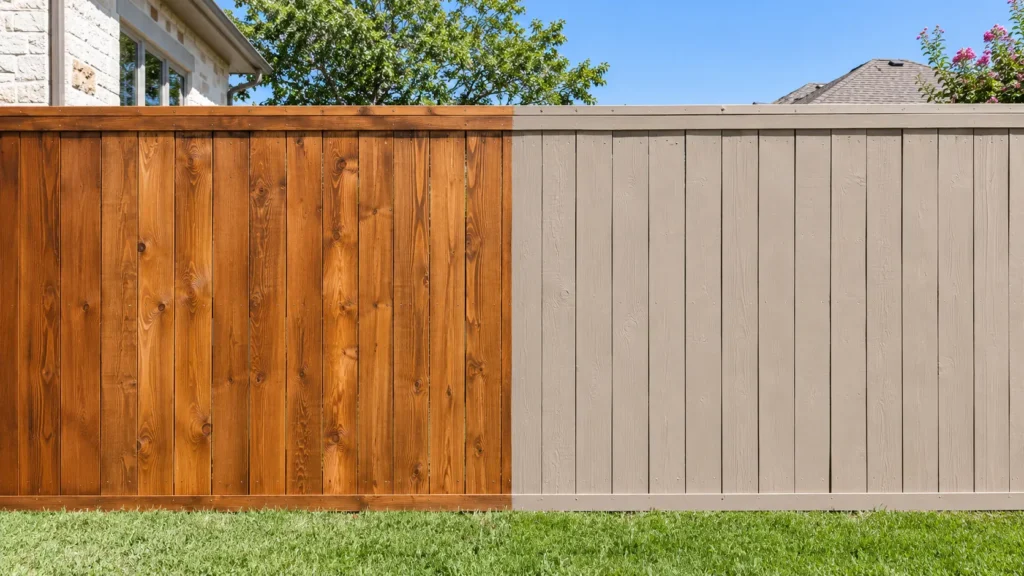
Paint lasts longer than stains on a San Antonio fence. A good paint job on a fence can last about 6 to 10 years or more. A see-through (semi-transparent) stain often lasts only 2 to 4 years in our hot Texas sun. But paint has a catch. When paint fails, it peels, and you must scrape and sand before you repaint. Stain just fades, so a fresh coat goes on fast and easy. So paint wins on lifespan, and stain wins on easy upkeep.
The numbers back this up. The USDA Forest Products Laboratory, one of the top wood research groups in the US, tracks how long wood finishes last outdoors. Its Wood Handbook chapter on finishing wood lists these service lives for common fence woods:
Wood type | Semi-transparent stain | Solid stain | Paint |
Cedar, smooth | 2 to 4 years | 8 to 12 years | 10 to 15 years |
Cedar, rough-sawn | 4 to 8 years | 10 to 15 years | 15 to 20 years |
Pine, smooth | 2 to 3 years | 6 to 8 years | 6 to 10 years |
Pine, rough-sawn | 4 to 7 years | 8 to 10 years | 8 to 12 years |
Those numbers come from milder weather. Here in San Antonio, expect the low end of each range, or even a bit less. Our sun, heat, and sudden storms work hard on every fence in town.
The same USDA research found something surprising. The sun starts to break down the top layer of bare wood within hours. In one study, paint on boards left in the sun for 16 weeks before painting peeled within 3 years. Paint on boards that got painted fast lasted far longer. The lesson is simple. Do not let new fence boards bake for months before you coat them.
Why the Texas Sun Is So Hard on Fences
San Antonio gets a lot of strong sun. Summer days often top 95°F, and many days pass 100°F. The National Weather Service Austin/San Antonio office tracks our heat, drought, and heavy rain all year.
Here is what that weather does to your fence:
- UV rays break down wood fibers and the binders in paint and stain.
- High heat makes wood swell and shrink every day. That movement cracks paint.
- Heavy rain soaks into bare spots and pushes paint off from behind.
- Dry spells pull moisture out of wood, so it turns gray and splits.
A fence on the west side of your yard takes the worst of it. It faces the hot afternoon sun for hours. Homes near Westover Hills, Alamo Ranch, and the open stretches along Loop 1604 often see fences fade fastest on that side.
How Fence Stain Works
Stain soaks into the wood. It does not sit on top like a skin. This is why stain fades instead of peeling.
Types of Fence Stain
- Clear or toner: Shows all the wood grain. It gives very little UV shield. I plan to redo it every 1 to 2 years here.
- Semi-transparent: Adds color but still shows grain. This is the most popular fence stain. Expect 2 to 4 years in San Antonio.
- Semi-solid: Shows a little grain with more color. It blocks more sun. Expect about 3 to 5 years.
- Solid stain: Looks a lot like paint but still breathes. It gives the best sun shield of all stains. Expect about 4 to 6 years or more.
Pros of Staining a Fence
- Fades slowly and evenly
- No peeling or flaking
- Easy to recoat with no scraping
- Shows off the natural wood look
- Lets the wood breathe, so it holds less trapped water
Cons of Staining a Fence
- Needs new coats more often
- Lighter stains give weak sun protection
- Color choices are more limited than paint
How Fence Paint Works
Paint forms a thick film on top of the wood. That film blocks UV rays very well. It also gives you almost any color you want. Many fence painting San Antonio TX homeowners pick paint for a clean, bold look that matches the house trim.
Pros of Painting a Fence
- Lasts the longest when you prep and apply it well
- Gives the strongest UV block
- Hides old stains, knots, and color changes
- Offers endless color choices
Cons of Painting a Fence
- Peels and cracks when it fails
- Needs scraping, sanding, and priming before a repaint
- Hides the natural wood grain
- Traps water if the wood stays wet
One more key point: once you paint a fence, you cannot easily go back to stain. Stain cannot soak through old paint. You would need to strip the fence down to bare wood first.
If you want a finish that lasts, our team handles fence painting for San Antonio homes with full prep and quality coatings.
Stain vs. Paint: Side-by-Side for San Antonio Fences
Feature | Stain | Paint |
Typical life in Texas sun | 2 to 6 years | 6 to 10+ years |
How it fails | Fades | Peels and cracks |
Recoat effort | Easy | Hard (scrape, sand, prime) |
Wood grain | Shows | Hidden |
UV protection | Low to high | High |
Color options | Wood tones, some colors | Any color |
Best for | Cedar, natural looks | Pine, old or mixed boards |
Which Wood Is Your Fence Made Of?
Wood type changes the answer. Most San Antonio fences use cedar or pine.
Cedar Fences
Cedar has natural oils that fight rot and bugs. It looks great with a semi-transparent or solid stain. Most cedar owners pick stains to keep that warm wood look.
Pine Fences
Pressure-treated pine is common and low cost. It often has knots and uneven color. Paint or solid stain hides these flaws well. Let new treated pine dry out first. This often takes a few weeks to a few months, but do not wait too long in full sun.
Older or Mixed Fences
Got an old fence with patched boards? Paint or solid stain will tie it all together. It gives one even color across old and new boards.
What About Your Deck?
Decks follow different rules. People walk on decks, and water sits on flat boards. Paint on a deck often peels in just 2 to 4 years. That is why most pros pick stains for decks. If your deck needs help too, see our deck staining services in San Antonio TX for a finish that handles foot traffic and sun.
How to Make Any Fence Finish Last Longer
Good prep matters more than the product. Follow these steps for the longest life:
- Clean the wood. Pressure wash on a low setting to remove dirt, mold, and gray fibers.
- Let it dry. Wait 48 to 72 hours. Wet wood will push paint and stain off.
- Fix bad boards. Swap out rotten or split pickets.
- Sand rough spots. Smooth fuzzy or raised grain.
- Prime bare wood before paint. Primer helps paint grip and last.
- Apply in mild weather. Skip hot afternoons. Spring and fall work best in San Antonio.
- Use two coats. USDA data shows a thin system can cut paint life by about half.
Signs Your Fence Needs a New Coat
For Stained Fences
- Water soaks in instead of beading up
- The wood looks gray or dry
- Color fades on the sunny side
For Painted Fences
- Paint peels, flakes, or bubbles
- You see cracks along the grain
- The color looks chalky when you rub it
Catch these signs early. A quick touch-up costs far less than a full strip and repaint.
Not sure if your fence needs stain or paint? Call River City Painting at (210) 800-4324 or request a free fence and deck estimate. We will look at your wood and give you an honest answer.
Cost: Stain vs. Paint Over Time
Paint often costs more up front. It needs primer, more prep, and more labor. Stain usually costs less per job.
But think about the long run. Over 10 years in the Texas sun, you might stain a fence three or four times. You might paint it once or twice. In many cases, the total cost ends up close. Your choice should come down to the look you want and how often you want to do upkeep.
Our Simple Rule of Thumb
- Pick stains if you love the wood look, own a cedar fence, and do not mind a fresh coat every few years.
- Pick paint if you want the longest life, a custom color, or need to hide an older fence.
- Pick a solid stain if you want a middle ground. It gives strong sun protection without the peeling risk of paint.
Why Choose River City Painting
River City Painting focuses on the outdoor wood that takes the most heat in San Antonio: fences and decks. We handle fence and deck painting as well as deck staining, so we can help you pick the right finish instead of pushing just one option.
We know how our local sun, heat, and storms affect wood. That is why we spend real time on prep, from cleaning and drying to sanding and priming. Good prep is what turns a 3-year finish into one that lasts much longer.
We serve homeowners across San Antonio, TX, and we work often on the Far West Side. If you live out that way, learn more about our painters in the Far West Side TX area. Whether you need a fresh coat on a sun-beaten cedar fence or a new stain on a worn deck, our team is ready to help.
Call (210) 800-4324 today or get your free painting estimate to start your project.
Conclusion
Paint lasts longer on a San Antonio fence, often by several years. Stain fades instead of peeling, so it is much easier to refresh. Cedar fences shine with stain, while pine and older fences often look best with paint or solid stain. Whatever you pick, strong prep and the right timing will help your fence stand up to the Texas sun.
FAQs
Paint usually lasts longer, often 6 to 10 years compared to 2 to 6 years for stains.
No, stain cannot soak through paint, so you must strip the fence to bare wood first.
Wait until the wood feels dry and water soaks in, often a few weeks, but do not leave it bare for months.
Spring and fall work best because mild temps help the finish dry evenly.
It usually comes from poor prep, wet wood, or sun-damaged boards under the paint.