
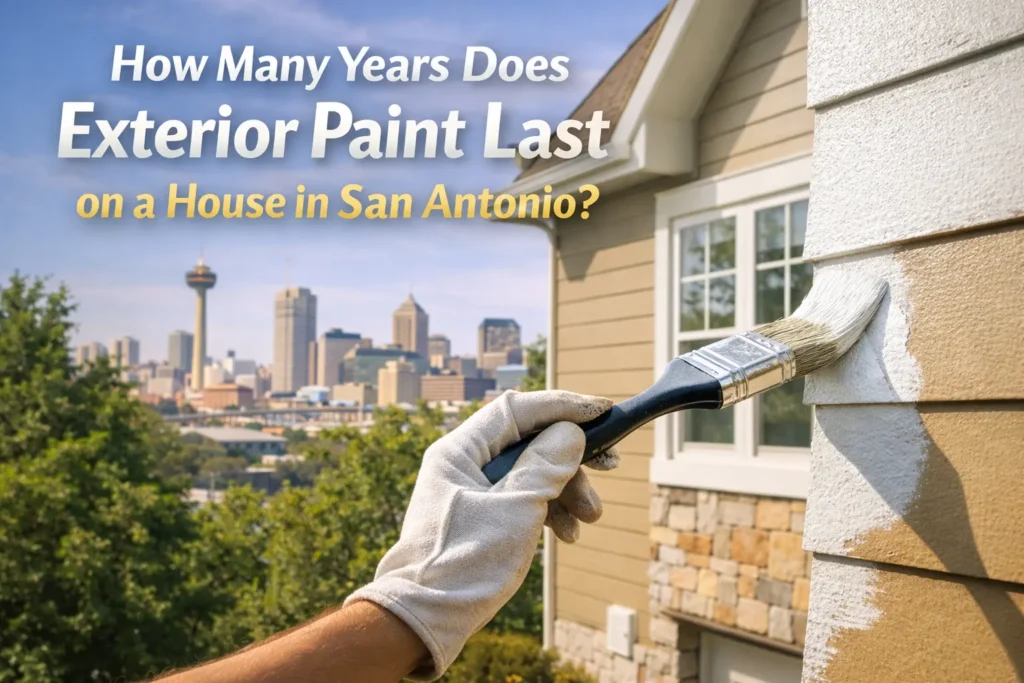
How Many Years Does Exterior Paint Last on a House in San Antonio
Blog

How Many Years Does Exterior Paint Last on a House in San Antonio?

If you’re a homeowner in San Antonio, you’ve probably wondered: “How long will my exterior paint actually last in this heat?” Because of intense UV exposure, 100°F+ summers, humidity, and sudden storms, exterior paint in San Antonio doesn’t last as long as it might in cooler climates. Short Answer: Most homes in San Antonio need repainting every 5–10 years. But the real lifespan depends on: Surface material Paint quality Sun exposure direction Preparation quality Ongoing maintenance As a proud member of the Painting Contractors Association (PCA), River City Painting follows professional industry standards to maximize durability and protect your investment. Let’s break it down properly. Exterior Paint Lifespan by Surface Type Different materials respond differently to Texas weather. Stucco – 7 to 10 Years Stucco performs well but expands and contracts in extreme heat. Hairline cracks are common and must be sealed before repainting. Best option: Elastomeric or high-quality acrylic coatings. Wood Siding 5 to 7 Years Wood absorbs moisture and expands with humidity. Without proper sealing, peeling can happen faster in San Antonio. Big risk: Delaying repainting can lead to wood rot. Fiber Cement (Hardie Board) 8 to 12 Years Very durable, but still vulnerable to UV fading and improper caulking. Painted Brick 10 to 15 Years Brick lasts long when properly primed, but moisture trapping can reduce lifespan if not done correctly. Trim & Fascia 4 to 6 Years Trim usually deteriorates faster than siding due to direct sun and water exposure. How Sun Direction Affects Paint in San Antonio This is something most homeowners don’t realize. South-Facing Walls Receive the most consistent UV exposure → Fade fastest. West-Facing Walls Afternoon heat is intense → Higher expansion and cracking risk. North-Facing Walls Stay shaded → More prone to mildew buildup. Shaded Areas Generally last longer but may require cleaning maintenance. This is why one side of your home may look worse than the others. Paint Type Makes a Huge Difference Not all exterior paints are equal. 100% Acrylic Latex (Best for Texas) Flexible in heat Strong UV resistance Long-lasting adhesion Elastomeric Coatings (Great for Stucco) Fills small cracks Waterproof barrier Excellent durability Oil-Based Paint (Rare Today) Less flexible → More cracking in extreme heat. Choosing the right product can extend lifespan by 3–5 years. What Happens If You Wait Too Long? Delaying repainting can lead to: Wood rot repair Stucco crack expansion Trim replacement Water intrusion Higher overall project cost Paint isn’t just cosmetic — it’s your home’s protective shield. Best Time to Paint a House in San Antonio Ideal seasons: Fall Spring Avoid: Peak summer heat High-humidity days Rain-heavy periods Proper scheduling improves adhesion and long-term performance. HOA & Neighborhood Requirements Many San Antonio communities require: Approved color schemes Repainting within certain timelines Maintenance compliance Failing to repaint on time may result in HOA notices or fines. Warranty Expectations for Exterior Painting Professional exterior painting typically includes: 5–10 year workmanship warranties Manufacturer paint warranties (varies by brand) Warranties can be voided by: Poor surface prep DIY repaint over failing paint Moisture issues were not corrected first River City Painting follows PCA standards to ensure warranty-backed work. How to Make Exterior Paint Last Longer Homeowners can extend paint life by: Annual soft washing Cleaning gutters regularly Inspecting caulking yearly Trimming trees away from the siding Addressing cracks early Preventative maintenance can add 1–3 extra years to your exterior. Why Homeowners Choose River City Painting River City Painting is: ✔ Proud member of the Painting Contractors Association (PCA) ✔ Experienced with San Antonio’s climate ✔ Focused on professional preparation ✔ Using premium, UV-resistant paints ✔ Committed to long-term durability We don’t rush projects. We prepare surfaces correctly so your paint lasts. Final Answer: How Long Does Exterior Paint Last in San Antonio? In most cases, 5–10 years is the realistic expectation for homes in San Antonio. With proper preparation, premium materials, and professional application, you can stay closer to the 8–10 year range. Cut corners, and you may repaint in 4–5 years. Frequently Asked Questions How long does stucco paint last in San Antonio? Typically 7–10 years with proper crack repair and elastomeric coating. Does dark paint fade faster in Texas? Yes. Dark colors absorb more heat and UV exposure, leading to faster fading. Can I repaint before peeling starts? Yes, and it’s often recommended to avoid surface damage. How much does exterior painting cost in San Antonio? Costs vary by size, surface condition, and paint quality. Professional inspections provide the most accurate estimate. How do I know if my house needs repainting? Look for fading, chalking, cracking, peeling, or exposed surfaces. Ready for a Professional Exterior Assessment? If you’re unsure whether your home needs repainting yet, River City Painting provides honest inspections and detailed recommendations. Protect your home before small issues become expensive repairs. Request your free exterior painting estimate today.

Should San Antonio Businesses Hire a Commercial Painter or DIY
Blog

Should San Antonio Businesses Hire a Commercial Painter or DIY?

  For San Antonio businesses, the decision between hiring a commercial painter or handling painting in-house isn’t just about cost — it’s about liability, downtime, durability, and long-term brand presentation. In South Texas, commercial paint systems face extreme heat, UV exposure, humidity, and dust. Mistakes that might seem minor in residential settings can become costly in commercial environments where square footage, customer traffic, and operational interruptions amplify the risk. This guide breaks down when DIY may seem appealing — and when hiring a professional commercial painter is the smarter business decision.   The Real Question: Cost Savings or Risk Exposure? At first glance, DIY commercial painting appears to reduce labor costs. However, commercial projects involve: Larger surface areas Higher ceilings and specialized equipment Strict scheduling requirements Customer-facing visibility Safety compliance considerations For most San Antonio businesses, the true comparison is not labor cost vs contractor cost, but short-term savings vs long-term risk. When DIY Commercial Painting Might Work There are limited scenarios where DIY painting may be reasonable, such as: Small office interiors with minimal prep Low-traffic storage spaces Minor touch-ups rather than full repaints In these cases, risk exposure is relatively low, and mistakes are less costly. However, even interior commercial spaces in San Antonio must account for humidity, proper curing time, and surface preparation. Why Commercial Painting Is More Complex Than It Appears Commercial properties differ significantly from residential homes. Common challenges include: High walls, stairwells, and warehouse ceilings Specialized coatings for durability Exterior exposure to intense South Texas sun ADA and safety compliance concerns Improper preparation or rushed application in these environments can result in paint failure within 1–3 years, compared to properly executed commercial systems that can last 7–10 years or more. The Hidden Costs of DIY Commercial Painting Many business owners calculate only the cost of paint and supplies. What is often overlooked includes: Employee downtime Disruption to customers Uneven finishes that affect brand image Safety risks from ladders or lifts Premature repainting due to adhesion failure In customer-facing businesses — restaurants, retail stores, medical offices — paint condition directly influences perception and professionalism. San Antonio Weather Increases the Risk South Texas’s climate makes commercial exterior painting particularly sensitive to timing and preparation. Extreme heat can cause paint to dry too quickly, weakening adhesion. High humidity can slow curing and trap moisture. Wind and dust can contaminate wet coatings. These conditions require experience and scheduling precision to avoid premature failure. For deeper insight into how climate affects performance, understanding how San Antonio’s weather affects exterior painting is critical when making this decision. Safety and Liability Considerations Commercial painting often involves: Scaffolding or lift equipment Multi-story structures Parking lot or pedestrian safety zones DIY efforts increase liability exposure if accidents occur. Professional commercial painters carry proper insurance, safety training, and compliance awareness factors that protect businesses from unexpected legal or financial consequences. Long-Term Impact on Brand and Property Value Commercial paint is not just maintenance; it is a visible reflection of a business’s standards. Fading, peeling, or uneven paint communicates neglect. A professionally executed paint system communicates stability, professionalism, and care. For many San Antonio businesses, especially those competing in high-traffic areas, appearance directly influences customer trust. When Hiring a Commercial Painter Is the Smarter Choice Hiring a professional commercial painter is generally the better decision when: The project is exterior-facing Surface preparation is extensive Business operations cannot tolerate disruption Safety equipment is required Long-term durability is a priority In these situations, professional expertise reduces risk and increases lifespan. Based on commercial project evaluations conducted by River City Painting, the most common reason businesses require premature repainting is inadequate preparation and improper scheduling in high-heat conditions. Key Takeaway for San Antonio Businesses DIY commercial painting may appear cost-effective upfront, but in San Antonio’s climate, the long-term risks often outweigh short-term savings. Heat, humidity, safety concerns, and operational downtime make commercial painting more complex than it initially appears. For most businesses, hiring a professional commercial painter reduces liability, improves durability, and protects brand image over time. Frequently Asked Questions Is DIY commercial painting cheaper? Upfront material costs are lower, but downtime, mistakes, and premature repainting often eliminate any savings. How long should commercial paint last in San Antonio? With proper preparation and climate-appropriate products, 7–10 years is typical. Poor application may fail within a few years. Does the San Antonio heat affect commercial buildings more than homes? Yes. Larger surface areas and darker materials absorb more heat, increasing expansion and stress on paint systems. Can businesses remain open during commercial painting? Yes, but professional scheduling minimizes disruption and ensures safety compliance. Is commercial painting tax-deductible? In many cases, maintenance-related painting may qualify as a business expense, but owners should consult a tax professional.

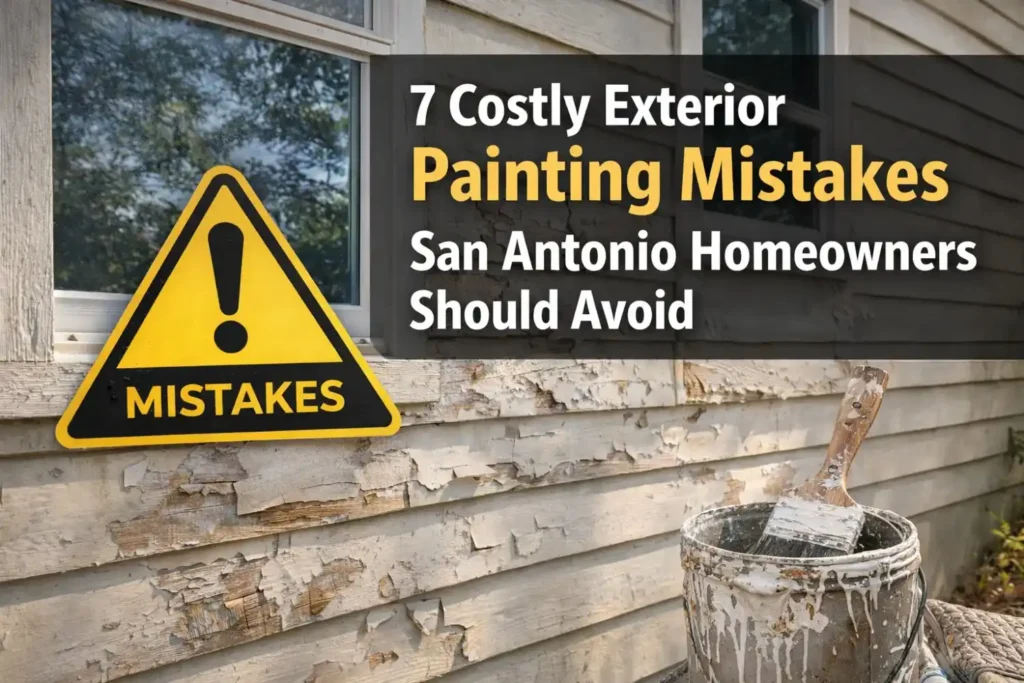
7 Costly Exterior Painting Mistakes San Antonio Homeowners Should Avoid
Blog

7 Costly Exterior Painting Mistakes San Antonio Homeowners Should Avoid

Exterior painting mistakes in San Antonio rarely fail immediately. Most problems surface months or even years later, once heat, humidity, and intense sunlight begin breaking down an improperly applied paint system. Because South Texas weather accelerates paint deterioration, mistakes that may seem minor elsewhere often turn into expensive repairs in San Antonio homes. This guide explains the most common exterior painting mistakes homeowners make — and why avoiding them protects both curb appeal and long-term structural integrity. Why Exterior Painting Is Riskier in San Antonio San Antonio’s climate places constant stress on exterior surfaces. Prolonged sun exposure, high temperatures, humidity, and seasonal storms all affect how paint adheres, cures, and ages. Many homes in the area feature stucco, fiber cement, and wood siding, each of which reacts differently to heat and moisture. When exterior painting decisions ignore these material differences, paint systems fail faster and repairs become more costly. 1. Painting Over Failing or Damaged Surfaces One of the most expensive mistakes homeowners make is painting over peeling, cracked, or bubbling paint without addressing the underlying issue. In San Antonio, surface failure often signals moisture intrusion or heat-related expansion. Applying new paint over damaged substrates traps problems beneath the surface, leading to faster deterioration and more extensive repairs later. What begins as a simple repaint can quickly escalate into substrate repair or moisture remediation when these warning signs are ignored. 2. Skipping Proper Surface Preparation Surface preparation is the foundation of exterior paint durability, especially in high-heat environments. When surfaces are not thoroughly cleaned, scraped, sanded, and primed, paint struggles to bond correctly. In San Antonio homes, inadequate preparation is one of the leading causes of early peeling, flaking, and uneven finishes — even when premium paint products are used. 3. Using the Wrong Paint for San Antonio’s Climate Not all exterior paints are designed for intense UV exposure and prolonged heat. Using products that are not formulated for South Texas conditions often results in rapid fading, chalking, and adhesion failure. Professional painters select coatings specifically rated for high temperatures, UV resistance, and humidity because product choice directly affects paint lifespan in San Antonio. 4. Painting at the Wrong Time of Year Timing mistakes are common and costly. Extreme summer heat can cause paint to dry too quickly, preventing proper curing. High humidity during rainy periods can trap moisture beneath paint layers, leading to blistering and premature failure. Exterior painting in San Antonio requires careful scheduling around temperature and moisture conditions. Understanding the best time to paint your home in San Antonio helps prevent many of these avoidable problems: 5. Rushing the Job to Finish Faster Speed is often mistaken for efficiency. Rushed exterior paint jobs frequently skip critical steps such as adequate drying time between coats or full surface repairs. In San Antonio’s climate, this mistake leads to visible defects, reduced durability, and the need for repainting far sooner than expected. Longer timelines usually indicate better preparation and stronger long-term results. 6. Ignoring Sun Exposure Differences Around the Home Not all sides of a home age the same way. South- and west-facing walls in San Antonio receive significantly more direct sunlight, causing faster breakdown of paint. Treating every side of the home identically without adjusting preparation or coatings often results in uneven fading and inconsistent durability. Professional exterior painting accounts for exposure differences to ensure uniform aging across the home. 7. Treating Exterior Painting as a Cosmetic Upgrade Only Perhaps the most costly mistake is viewing exterior painting as purely aesthetic. In San Antonio, exterior paint serves as a protective barrier against heat, moisture, and material degradation. When painting decisions focus only on appearance, underlying surfaces suffer long-term damage that is far more expensive to repair than repainting done correctly from the start. Before Repainting, San Antonio Homeowners Should Consider Before starting an exterior painting project, homeowners should evaluate surface condition, sun exposure, material type, and seasonal timing. These factors determine whether paint protects the home or simply masks problems temporarily. Addressing these considerations early prevents premature failure and unnecessary repair costs. Why These Mistakes Cost More in San Antonio Homes Exterior paint failures escalate quickly in San Antonio due to constant environmental stress. Minor peeling or fading can rapidly turn into moisture damage, wood rot, or substrate failure when preparation or application steps are skipped. Avoiding these mistakes protects not just curb appeal, but the long-term health of the home. Key Takeaway for San Antonio Homeowners Exterior painting mistakes are expensive because they shorten paint lifespan and expose homes to heat and moisture damage. Proper preparation, climate-appropriate products, correct timing, and thoughtful application are not optional in San Antonio — they are essential. Based on local project evaluations conducted by River City Painting, the most common reason homeowners require premature repainting is cutting corners during preparation and application in high-heat conditions. Frequently Asked Questions Why does exterior paint fail faster in San Antonio? Heat, UV exposure, and humidity accelerate paint breakdown, especially when surfaces are not properly prepared or paint is applied at the wrong time. Can exterior paint be applied year-round in San Antonio? No. Extreme heat and high humidity negatively affect curing and adhesion, making timing critical for long-term results. Is expensive paint enough to prevent problems? No. Even premium paint fails quickly without proper preparation, timing, and application methods. How long should exterior paint last in San Antonio? With professional preparation and climate-appropriate products, exterior paint can last 7–10 years. Poor preparation can reduce this to just a few years. Is repainting cheaper than repairing damage later? Yes. Preventative exterior painting is significantly less expensive than repairing moisture or substrate damage caused by paint failure.

How Long Does Interior Painting Take in San Antonio Homes
Blog

How Long Does Interior Painting Take in San Antonio Homes?

Interior painting timelines in San Antonio homes depend on more than square footage alone. Factors like surface condition, preparation requirements, humidity, and home layout play a major role in how long a professional paint job actually takes. In South Texas, rushing interior painting often leads to uneven finishes, visible patching, and early paint failure. This guide explains how long interior painting typically takes in San Antonio homes and why longer timelines often result in better outcomes. Average Interior Painting Timelines in San Antonio For most professionally painted homes in San Antonio, interior painting takes anywhere from two to seven days. Smaller projects, such as one or two room,s are often completed within one to two days, while full interior repaints usually require several days to allow for proper preparation, coating, and drying. A 1,000 to 1,500 square foot home typically takes two to four days when walls are in good condition. Larger homes, or those requiring drywall repair and priming, commonly take four to six days or longer. These timelines reflect professional standards rather than rushed cosmetic work.   Why Interior Painting Often Takes Longer in San Antonio San Antonio’s heat and humidity directly affect how paint behaves indoors. Even with climate control, humidity slows curing and increases the risk of adhesion problems if coats are applied too quickly. Professional painters adjust timelines to account for these conditions. Allowing paint to cure properly between coats prevents issues like flashing, roller marks, and uneven sheen, which are common in rushed interior paint jobs. Surface Preparation Is the Biggest Time Factor In many San Antonio homes, surface preparation takes as long as the painting itself. Walls often show cracks, nail pops, water stains, or texture inconsistencies caused by heat-related expansion and seasonal moisture. Professional preparation includes repairing drywall, sanding uneven surfaces, priming patched areas, and correcting previous paint failures. While this adds time to the project, it directly impacts how smooth and durable the final result will be. Homes that skip proper prep may look finished faster, but flaws typically reappear within months.   Home Layout Matters More Than Square Footage Two homes with the same square footage can have very different interior painting timelines. Open floor plans with standard ceiling heights allow painters to work efficiently, while homes with vaulted ceilings, stairwells, multiple doorways, and heavy trim slow the process. Accent walls, multiple color changes, and detailed trim work also increase production time. These factors often explain why some interiors take several extra days, even when the home size appears modest.   Drying and Curing Time Between Coats Paint may feel dry to the touch within hours, but curing takes significantly longer. In San Antonio’s humid environment, professional painters often extend drying times to ensure proper bonding and long-term durability. Rushing coats leads to poor washability, premature peeling, and uneven texture. Longer timelines usually indicate that painters are respecting cure times rather than cutting corners.   Occupied Homes Take Longer to Paint Interior painting moves faster in vacant homes because painters can work continuously without staging or disruption. Occupied homes typically require a phased approach, painting one area at a time to maintain livable space. While this adds days to the schedule, it improves safety, cleanliness, and overall quality. Most homeowners prefer a slightly longer timeline over rushed work that disrupts daily life.   How Painting Timelines Affect Cost Expectations Longer timelines usually reflect additional preparation, not inefficiency. Many homeowners underestimate this, which is why understanding realistic pricing helps set accurate expectations. This breakdown explains how preparation and scope influence interior painting costs in San Antonio homes:   Key Takeaway for San Antonio Homeowners Interior painting in San Antonio typically takes two to seven days, depending on home size, wall condition, layout, and humidity levels. Faster timelines often mean preparation or curing steps are being skipped, which shortens paint lifespan. Based on local project evaluations conducted by River City Painting, the most common cause of interior paint failure is insufficient surface preparation combined with rushed drying in high-humidity conditions.   Frequently Asked Questions How long does it take to paint a 1,000 sq ft home interior in San Antonio? Most professional interior paint jobs for a 1,000 sq ft home take two to four days, depending on prep work and humidity levels. Can an entire interior be painted in one day? Only very small or low-prep projects can be completed in one day. Full interiors finished in one day usually involve skipped prep or reduced coats. Does humidity really affect interior paint drying? Yes. High humidity slows curing and increases the risk of adhesion issues, which is why professional painters adjust timelines. Is it faster to paint an empty home? Vacant homes allow uninterrupted work and usually reduce timelines by one to two days. What is the best season for interior painting in San Antonio? Interior painting can be done year-round, but spring and fall often provide more stable humidity conditions for consistent results.

5 Signs You Need a Professional Painter in San Antonio
Blog

5 Signs You Need a Professional Painter in San Antonio

In San Antonio, paint problems rarely start with appearance alone. Most paint failures are caused by heat stress, moisture intrusion, and surface breakdown long before peeling or fading becomes obvious. Homeowners typically need a professional painter when repainting involves surface damage, environmental exposure, or large-scale work. In South Texas heat and humidity, repainting without proper preparation often leads to early failure rather than long-term protection. The five signs below reflect the most common conditions where professional residential painting is required in San Antonio homes. Why Paint Fails Faster in San Antonio Homes San Antonio’s climate places constant stress on residential paint systems. High temperatures, intense sunlight, and seasonal humidity cause paint to expand, contract, and degrade more aggressively than in milder regions. Many homeowners repaint without realizing that: Heat accelerates adhesion failure Moisture becomes trapped beneath paint layers Improper preparation shortens paint lifespan Understanding when paint failure is cosmetic vs. structural is critical when deciding whether professional painting is necessary. 1. Paint Is Peeling, Cracking, or Bubbling If paint is peeling, cracking, or bubbling, professional painting is required. In San Antonio homes, these conditions typically indicate: Moisture intrusion behind the paint film Heat-driven expansion and contraction Adhesion failure caused by inadequate surface preparation Repainting without correcting these issues often results in rapid failure. Professional painters identify moisture sources, repair damaged substrates, and ensure proper bonding before applying new coatings. 2. Fading or Uneven Color Exposure When exterior paint fades unevenly or loses color intensity, professional repainting is recommended. San Antonio’s intense sunlight causes: UV breakdown of paint pigments Premature chalking and oxidation Uneven fading across sun-exposed elevations Professional painters use UV-resistant coatings and surface preparation methods designed for high-exposure environments. If you’re estimating materials, this guide on how much paint you need for a 2,000 sq ft home explains why professional calculations are often more accurate than online tools: 3. Wall Damage or Surface Imperfections Are Visible Professional painting is necessary when walls show: Cracks, dents, or failing drywall seams Water stains or discoloration Texture inconsistencies or previous patch failures These issues require proper patching, sanding, priming, and blending. Without professional surface correction, defects remain visible through new paint and often worsen. For interior projects, understanding cost expectations helps avoid surprises. This breakdown explains how much it should cost to paint a 1,000 sq ft interior in San Antonio homes: 4. The Project Scope Is Too Large or Complex Professional painters are recommended for projects involving: Multiple rooms or full-home repaints High ceilings, stairwells, or vaulted spaces Detailed trim, doors, or crown molding Two-story or multi-surface exteriors Large projects often exceed safe access limits and time efficiency for non-professional work, especially in high-heat conditions. 5. Long-Term Durability Matters More Than Appearance If the goal is long-lasting protection rather than short-term improvement, professional painting is required. Durability depends on: Thorough surface preparation Climate-appropriate product selection Correct application methods and curing conditions In San Antonio’s warm, humid environment, skipping these steps can significantly shorten paint lifespan. Timing also matters. Painting during the wrong season can affect adhesion and curing, which is why understanding the best time to paint your home in San Antonio is essential: Why Professional Painting Matters in San Antonio Paint failure in San Antonio most often results from: Heat stress caused by prolonged sun exposure Moisture infiltration from humidity and storms Inadequate surface preparation before repainting Professional painters address these risks systematically, not cosmetically. Key Decision Rule for San Antonio Homeowners When paint problems involve surface damage, environmental exposure, or large-scale work, hiring a professional painter is not a luxury — it is a protective investment in the home. Based on local project evaluations conducted by River City Painting, the most common reason homeowners regret DIY painting is insufficient surface preparation in high-heat environments. Frequently Asked Questions   How do I know if paint damage is structural or just cosmetic? Cosmetic issues affect appearance only, while structural paint damage involves peeling, bubbling, moisture intrusion, or substrate failure. In San Antonio’s climate, bubbling and peeling almost always indicate underlying problems that require professional repair. Is it worth hiring a professional painter in San Antonio? Yes. Professional painters account for heat, humidity, UV exposure, and surface conditions. These factors directly affect paint lifespan and are difficult to manage without professional preparation and materials. How long should exterior paint last in San Antonio? With proper preparation and climate-appropriate products, exterior paint can last 7–10 years. Without professional prep, failure can occur in as little as 2–4 years. Does San Antonio heat really affect paint durability? Yes. High temperatures accelerate paint expansion, pigment breakdown, and adhesion failure. Paint systems not designed for South Texas conditions deteriorate much faster. When should I repaint instead of touching up? Repainting is recommended when damage is widespread, surfaces are uneven, or multiple problem areas exist. Touch-ups rarely hold up well in high-heat, high-UV environments like San Antonio. What is the best time of year to repaint a home in San Antonio? The best time is typically during mild spring and fall conditions, when temperatures and humidity allow proper curing and adhesion. Summer heat and winter moisture can compromise results.

How much should it cost to paint the interior of a 1000 sq ft house
Blog

How much should it cost to paint the interior of a 1000 sq ft house?

If you’re trying to budget how much it should cost to paint the interior of a 1,000 sq ft house, here’s the straight answer most homeowners are looking for: Painting the interior of a 1,000 sq ft home typically costs between $2,000 and $5,000, depending on labor rates, wall condition, number of coats, ceilings, trim, and paint quality. This price range reflects real-world contractor pricing, not ideal scenarios. Lower prices usually mean minimal prep or one coat, while higher prices include full prep, ceilings, and trim. Quick Cost Snapshot Item Typical Range Labor $1,600 – $4,000 Paint & materials $300 – $1,000 Total interior cost $2,000 – $5,000 If your home is occupied, has wall repairs, or includes trim and ceilings, expect costs toward the higher end. Why a 1,000 Sq Ft House Costs More Than People Expect One reason homeowners get confused is how square footage works. A 1,000 sq ft house refers to floor space, not wall surface. In reality: Paintable wall area is usually 2.5–3× the floor size That equals 2,500–3,000 sq ft of interior walls Most professional jobs include two coats of paint This is why pricing based only on “house size” is often misleading. Average Interior Painting Cost Per Square Foot Professional painters typically price by paintable surface area, not just floor size. Current market ranges: $1.50 – $3.50 per sq ft for standard repainting $4 – $6 per sq ft for detailed work or heavy prep For a 1,000 sq ft home, this aligns with a total project cost of $2,000–$5,000. Real-World Interior Painting Cost Examples Most competitor articles give ranges but no context. Here’s how pricing looks in real situations: Home Scenario Scope of Work Realistic Cost Empty home, good walls Walls only, 2 coats $1,800 – $2,500 Lived-in home Walls + light prep $2,500 – $3,500 Older home Wall repairs + repaint $3,500 – $4,800 Full repaint Walls, ceilings, trim $4,000 – $5,500 These examples reflect actual contractor workflows, not best-case estimates. Cost Breakdown by Room Most homeowners think in rooms, not square feet. Average Interior Painting Cost per Room Bedroom: $300 – $700 Living room: $600 – $1,200 Kitchen: $400 – $900 Bathroom: $200 – $500 Hallways & closets: $200 – $400 Homes with more rooms or accent walls usually cost more overall. How Much Does Interior Paint Cost Alone? Paint prices vary by quality and brand. Most professionals use products from brands like Sherwin-Williams, Benjamin Moore, or Behr. Typical paint usage: 8–12 gallons for walls $30–$60 per gallon Paint-only cost: $300 – $700 (Paint is usually included in professional quotes.) Do Ceilings Increase the Cost? Yes, ceilings are often priced separately. Most ceilings need one coat Typical cost: $0.50 – $1.50 per sq ft For a 1,000 sq ft home: Ceiling painting adds $500-$1,500 Vaulted or textured ceilings increase labor time and cost. Cost to Paint Trim, Doors, and Baseboards Trim work is detail-heavy and increases labor time. Typical add-ons: Interior doors: $50-$100 per door Baseboards & trim: $300-$800 Semi-gloss and gloss finishes take longer and require more prep. How Many Coats Are Included in the Price? Most professional quotes include two coats on the walls. Extra coats may be needed when: Painting over dark colors Covering stains Changing paint sheen One-coat jobs are cheaper but usually don’t last. How Long Does It Take to Paint a 1,000 Sq Ft House? Typical professional timeline: Prep work: 1 day Painting walls: 1–2 days Ceilings & trim: 1 day Touch-ups & cleanup: ½ day Total time: 2.5–4 days Occupied homes may take longer due to furniture protection and staging. A Simple Interior Painting Cost Formula (Paintable wall sq ft × rate per sq ft) + ceilings + trim + prep Example: 3,000 sq ft × $2.50 = $7,500 (raw labor value) Bundled contractor pricing → $3,000–$4,500 final This explains why contractor quotes look different from online calculators. Hidden Costs These factors often change the final price: Moving heavy furniture Wall damage or nail hole repairs Low-VOC or odor-resistant paint upgrades Occupied homes (slower workflow) Rush timelines or weekend work Transparent contractors will explain these upfront. DIY vs Professional Interior Painting Cost DIY: Paint & supplies: $300 – $800 Time: 3–7 days No labor warranty Professional: $2,000 – $5,000 Faster completion Better finish Less stress DIY saves money but costs time and effort. When a Painting Quote Is Too Cheap Be cautious if a quote: Includes only one coat Skips surface prep Uses low-quality contractor paint Has no written scope or warranty Cheap jobs often cost more later in touch-ups and repainting. Frequently Asked Questions How much should it cost to paint the interior of a 1,000 sq ft house? Most homeowners pay $2,000 to $5,000, depending on prep work, ceilings, trim, and paint quality. Is paint included in interior painting quotes? Yes, most professional quotes include paint and materials. Does wall repair increase painting cost? Yes. Extensive drywall repairs are usually priced separately. Is it cheaper to paint an empty house? Yes. Empty homes are faster to paint and often cost less. How long does interior paint last? Quality interior paint typically lasts 7–10 years with proper prep. Final Takeaway Painting the interior of a 1,000 sq ft house usually costs between $2,000 and $5,000, including labor and materials. The final price depends on prep work, number of coats, ceilings, trim, and paint quality. If you want durable results and less hassle, professional painting is often worth the investment.

How Much Paint Do You Need for a 2,000 Sq Ft Home
Blog

How Much Paint Do You Need for a 2,000 Sq Ft Home?

  How Much Paint Do You Need for a 2,000 Sq Ft Home? If you’re searching for how much paint is needed for a 2,000 sq ft home, here’s the direct answer most homeowners want: A 2,000 sq ft home typically needs 10–15 gallons of paint for interior walls and 12–18 gallons for exterior walls, depending on wall texture, number of coats, and average paint coverage per gallon. For homes in San Antonio, paint usage is often higher due to stucco exteriors, textured drywall, and intense Texas heat, which usually requires two coats for proper coverage and durability. Quick Paint Estimate for a 2,000 Sq Ft House Area 1 Coat 2 Coats Interior walls 5–8 gallons 10–15 gallons Exterior walls 6–9 gallons 12–18 gallons Most South Texas homes require two coats, especially for exterior painting. Is 2,000 sq ft the House Size or the Wall Area? This is one of the most common user confusions, and many competitor articles skip it. A 2,000 sq ft home refers to floor space, not wall square footage. Interior wall area is usually 2.5–3× the floor area That equals 5,000–6,000 sq ft of paintable wall space One gallon of paint covers 350–400 sq ft on average Understanding this explains why paint estimators often feel inaccurate. How Much Paint for Interior Walls of a 2,000 Sq Ft Home? Interior paint calculation: Wall square footage: ~5,000-6,000 sq ft Average paint coverage: 350-400 sq ft per gallon Result: 1 coat: 7–8 gallons 2 coats: 10–15 gallons You may need extra paint per room if your home has: Vaulted or high ceilings Orange peel or knockdown texture Dark-to-light color changes Accent walls How Much Paint for Ceilings in a 2,000 Sq Ft Home? Ceiling paint is not included in wall estimates. Most ceilings need one coat Coverage is similar to walls Typical requirement: 4-6 gallons This is an important detail many paint calculators overlook. How Much Paint for Doors, Trim, and Baseboards? Trim and doors use thicker paint and different finishes. Typical estimates: Interior doors: 1 gallon per 6-8 doors Baseboards and trim: 1-2 gallons for a 2,000 sq ft home Always calculate trim separately from wall paint. How Much Exterior Paint for a 2,000 Sq Ft Home? Exterior paint estimates vary more due to surface type and climate. Average exterior square footage: 2,000-2,500 sq ft Exterior house paint estimate: 1 coat: 6–9 gallons 2 coats: 12–18 gallons Homes in Texas often require weather-resistant and UV-resistant exterior paint, which can slightly reduce the spread rate. Does Stucco Require More Paint? Yes, and this is especially relevant in San Antonio. Stucco surfaces typically require: 20-30% more paint Two full coats minimum Heavier application methods This is why stucco paint coverage is always higher than smooth siding.  How Many Coats of Paint Do You Really Need? Surface Recommended Coats Interior walls 2 Ceilings 1 Exterior siding 2 Stucco 2 Dark-to-light colors 2–3 One coat may look fine initially, but it rarely lasts. How Much Extra Paint Should You Buy? A simple rule used by professional painters: Add 10% extra paint for waste, touch-ups, and future repairs. Running out mid-project can cause: Color mismatch Uneven sheen Delays and extra cost How Much Does Paint Cost for a 2,000 Sq Ft Home? Average paint prices from major brands like Sherwin-Williams, Behr, and Benjamin Moore: $30–$60 per gallon Estimated paint-only cost: Interior: $300-$900 Exterior: $400-$1,100 Labor, prep work, and primer are not included. Can You Rely on a Paint Calculator? A paint calculator helps only if you: Enterthe  correct wall square footage Adjust for the number of coats Account for stucco and texture Most online calculators underestimate exterior paint for hot-climate homes. When Should You Hire a Professional Painter in San Antonio? Hiring a local painter makes sense if: Your home has stucco or a heavy texture You’re painting during the summer heat You want longer-lasting exterior protection You’re unsure about paint quantity and coverage Local professionals understand Texas climate conditions, drying times, and proper coatings. Frequently Asked Questions How many gallons of paint do I need for a 2,000 sq ft house interior? Most homes need 10–15 gallons for two coats of interior wall paint. Do ceilings count in paint estimates? No. Ceilings usually require 4–6 additional gallons. Does stucco use more paint? Yes. Stucco typically needs 20-30% more paint than smooth surfaces. Is primer included in paint coverage? No. Primer must be calculated separately. How long does exterior paint last in Texas heat? High-quality exterior paint lasts 7–10 years, depending on sun exposure and preparation. Final Summary For a 2,000 sq ft home, expect: 10–15 gallons for interior walls 12–18 gallons for exterior surfaces Additional paint for ceilings, trim, and touch-ups Homes in San Antonio, Texas, often require extra paint due to stucco and extreme heat, making two coats the best choice for long-term durability.

Blog

What Should You Paint First: Interior or Exterior?

Deciding between interior painting and exterior painting in San Antonio depends on home condition, climate exposure, usage patterns, and timing, not personal preference alone. This guide explains which painting project San Antonio homeowners should prioritize first, based on cause–and–effect logic and local environmental factors. This article compares professional interior and exterior residential painting projects in San Antonio. DIY projects and non-local comparisons are excluded to maintain relevance. The Core Difference Between Interior and Exterior Painting Interior and exterior painting serve different functional purposes: Interior painting focuses on comfort, aesthetics, and indoor surface protection Exterior painting protects the home from weather, heat, and environmental damage In San Antonio, climate exposure often shifts priority toward exterior protection, depending on timing and condition. When Exterior Painting Should Come First Exterior painting should be prioritized when the home shows signs of: Fading or peeling paint Exposed wood or stucco Cracked caulking or joints Sun or heat damage San Antonio’s intense sunlight accelerates: UV degradation Paint breakdown Moisture intrusion through exposed surfaces Delaying exterior painting in these conditions can lead to structural repairs that cost more than repainting. When Interior Painting Makes More Sense First Interior painting may be the better first step when: The exterior paint is still intact Interior walls show wear, stains, or outdated colors The home is being prepared for sale or occupancy Interior painting offers: Faster completion Minimal weather dependency Immediate visual improvement For homeowners planning to sell, interior painting often delivers faster cosmetic ROI. How Timing and Season Affect the Decision Seasonal conditions in San Antonio influence project order: Spring/Fall: Exterior painting performs best Summer/Winter: Interior painting is more predictable When exterior conditions are unfavorable, interior painting allows homeowners to progress without weather risk. Cost and Project Sequencing Considerations Sequencing matters: Exterior painting may require scaffolding or heavy prep Interior painting is easier to phase room-by-room In many cases, homeowners benefit from: Addressing exterior protection first Scheduling interior painting afterward This approach reduces risk and spreads costs more effectively. Key Insight for San Antonio Homeowners San Antonio homeowners should prioritize exterior painting first when weather exposure threatens surface integrity, and interior painting first when cosmetic improvement or occupancy timing is the primary goal. The right choice depends on condition and climate, not aesthetics alone. Planning Painting Projects Strategically Homeowners who evaluate surface condition, seasonal timing, and usage needs make more cost-effective painting decisions. Based on local project assessments conducted by River City Painting, exterior painting is often prioritized first when visible weather damage is present, while interior painting is scheduled first for homes preparing for sale or renovation.

When Is the Best Time to Paint Your Home in San Antonio
Blog

When Is the Best Time to Paint Your Home in San Antonio?

The best time to paint a home in San Antonio depends on temperature stability, humidity levels, rainfall patterns, and project scheduling conditions. This guide explains when professional residential painting performs best in San Antonio, based on local climate behavior, not generalized seasonal advice.   This article focuses on professional residential painting projects in San Antonio. DIY timing considerations and non-local climate assumptions are excluded to maintain local accuracy. How San Antonio’s Climate Affects Residential Painting San Antonio experiences: Hot summers Mild winters Periods of high humidity Occasional heavy rain Each of these factors directly influences: Paint adhesion Drying time Finish durability Spring: The Most Balanced Painting Season Spring (March–May) is often the most favorable time to paint in San Antonio because: Temperatures are moderate Humidity is lower Rainfall is manageable Both interior and exterior painting projects tend to: Cure evenly Require fewer weather-related delays Produce consistent finishes Summer: High Demand, Higher Risk Summer (June–August) brings: Extreme heart Intense UV exposure Exterior painting in summer: Requires heat-resistant coatings Demands early-morning or late-day scheduling Increases prep and material requirements Interior painting remains feasible but may require additional ventilation and climate control. Fall: Ideal for Exterior Painting Fall (September–November) is one of the best seasons for exterior painting due to: Reduced humidity Stable temperatures Lower rainfall Paint is applied in the fall often: Bonds effectively Experiences less thermal stress Delivers longer-lasting results Winter: Interior-Focused Opportunities San Antonio’s mild winters make interior painting practical year-round. Exterior painting may be limited during cold or wet periods, but interior projects benefit from: Flexible scheduling Lower seasonal demand Faster project turnaround How Timing Affects Painting Costs Painting costs fluctuate based on: Seasonal demand Weather-related prep needs Scheduling availability Peak seasons may have: Longer lead times Higher demand for professional crews Planning ahead allows homeowners to: Secure preferred scheduling Avoid rushed projects Optimize overall project value Key Insight on Painting Timing in San Antonio The best time to paint a home in San Antonio is when weather stability aligns with proper preparation and scheduling, not simply when temperatures are warm. Projects completed under stable conditions consistently deliver better adhesion and longer finish life. Planning a Painting Project in San Antonio Homeowners planning ahead and aligning projects with seasonal conditions typically achieve better results and smoother execution. Based on local project scheduling patterns observed by River City Painting, fall and spring offer the most consistent conditions for residential painting projects in San Antonio.

How much does commercial painting cost in San Antonio in 2026
Blog

How Much Does Commercial Painting Cost in San Antonio?

Building type, surface condition, operational constraints, and preparation requirements determine commercial painting cost in San Antonio. This guide explains professional commercial painting costs for San Antonio businesses in 2026, focusing on local project variables, not residential pricing or national averages. This article addresses professional commercial painting services in San Antonio. Residential projects, DIY pricing, and national cost averages are excluded to preserve relevance for business owners and property managers. Average Commercial Painting Cost in San Antonio (2026) Commercial painting projects in San Antonio typically fall within these ranges: Per square foot: $2.00 – $6.00 Small offices or retail spaces: $2,500 – $6,500 Large commercial buildings: $10,000+ These estimates generally include: Labor Commercial-grade materials Standard surface preparation Professional application Projects involving special coatings, high ceilings, or strict scheduling requirements typically fall toward the higher end.   Why Commercial Painting Costs Vary in San Antonio Commercial painting pricing varies more than residential projects due to scale, usage demands, and operational factors. 1. Building Type & Usage Commercial spaces in San Antonio include: Offices Retail locations Restaurants Warehouses Hospitality facilities Each environment requires: Different paint systems Varying durability levels Specific safety or compliance standards 2. Surface Condition & Preparation Commercial surfaces often require: Extensive patching or drywall repair Surface cleaning and degreasing Primer systems for high-traffic areas Preparation complexity directly impacts both cost and durability. 3. Operational Scheduling Constraints Many businesses require: Night or weekend work Phased painting to remain operational Fast-drying or low-odor coatings These constraints increase labor coordination and project cost. 4. Ceiling Height & Accessibility Commercial buildings frequently have: High ceilings Industrial surfaces Difficult-to-access areas This increases: Equipment needs Safety planning Labor time Commercial Painting vs DIY for Businesses in San Antonio DIY painting is rarely cost-effective for commercial spaces due to: Labor inefficiency Safety risks Inconsistent finish quality Business disruption Professional commercial painting reduces downtime and ensures long-term performance. How Commercial Painting Impacts Business Value A professionally painted commercial space: Enhances brand perception Improves employee morale Protects building surfaces For property managers, professional painting helps preserve asset value and reduce long-term maintenance costs. How Accurate Commercial Painting Estimates Are Determined Commercial painting estimates are based on: Square footage Surface type and condition Coating system requirements Project timeline and access constraints According to project evaluations conducted by River City Painting, scheduling flexibility and surface preparation account for the largest pricing differences between similar commercial spaces. Key Insight on Commercial Painting Costs in San Antonio Commercial painting cost in San Antonio is driven more by operational requirements and surface preparation than by paint cost alone. Businesses that plan projects strategically experience less disruption and longer-lasting finishes. Getting a Commercial Painting Estimate in San Antonio Businesses working with River City Painting receive commercial painting estimates based on building type, operational needs, and local conditions, not generic pricing formulas. If you’re planning a commercial painting project, the next step is a professional site evaluation. Request a commercial painting estimate to receive accurate pricing and scheduling options.

Scroll to Top