

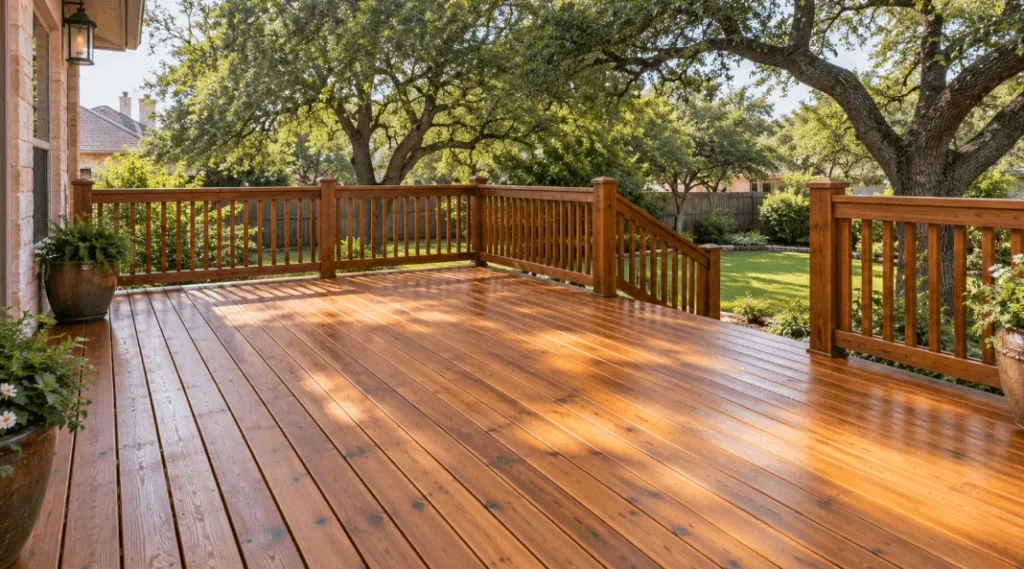
The best time to stain a deck in San Antonio is spring, from March to early May, and fall, from October to mid-November. In both windows, the air stays between 50 and 90 degrees, the wood dries fast, and you can find a few dry days in a row. Skip July and August. The Texas sun bakes the boards, and the stain dries before it can soak in. Local crews book up fast in these two windows, so plan your deck staining service in San Antonio, TX early.
Trusted brands and government sources back this up. Sherwin-Williams tells homeowners to stain on a day between 50 and 90 degrees, out of direct sun, with no rain in the forecast for the coming week. You can read the steps in their deck staining guide. The National Weather Service shows that San Antonio’s normal highs average about 95 degrees in July and 97 degrees in August, based on 1991 to 2020 records. You can see the numbers in the NWS San Antonio climate data. Those highs sit above the safe range for most stains. The USDA Forest Service adds that bare wood starts to turn yellow or brown, and then gray, after about two months in the sun.
Why Spring Works So Well for Deck Staining in San Antonio
Spring gives you the mildest weather of the year for staining. March through early May brings cool mornings and warm afternoons. The boards stay below the heat that ruins stains. Your deck also gets fresh protection right before the strong summer sun arrives.
April is the sweet spot. The temperatures sit in the safe range, and you still have weeks of room before the heat climbs. If you wait until late May, you risk hot afternoons and sudden storms.
What to Watch in Spring
- Storms. Spring storms can roll through Bexar County fast. Check the forecast for the next five to seven days before you start.
- Dust and pollen. Spring coats a deck with dust. Wash the boards right before you stain, so the stain meets clean wood.
- Late cold snaps. A chilly night in early March can slow drying. Wait until the nights stay above 50 degrees for the first 48 hours.
Fall Gives You a Second Chance
Fall is your backup plan, and many homeowners like it even more than spring. Late September can still feel like summer, so wait for the first real cool days. October and early November give you mild air, cooler nights, and dry stretches that help stain cure.
Aim to finish before the first cold snap. Stain needs about 48 hours of steady weather to cure. A cold, damp night can slow that process and leave a tacky finish.
Fall also brings leaves. Wet leaves can leave dark marks on bare wood. Sweep them off before you start, and clear the gaps between boards.
Why Summer Is the Worst Time to Stain a Deck in San Antonio
Hot boards cause many stain failures. Here is what goes wrong in July and August:
- The stain dries too fast. It sits on top of the wood instead of soaking in. A thin surface film peels early.
- The boards run hotter than the air. Direct sun can heat a deck far past the air temperature, even when the forecast looks fine.
- Lap marks and blotches show up. Fast drying leaves streaks where one brush stroke meets the next.
- Sudden storms hit wet stains. Rain on fresh stains can wash it off and leave a spotty finish.
What if you must stain in summer? Work early in the morning, stay in the shade, and keep each section small. Even then, waiting for fall gives you a better result and a longer-lasting coat.
Can You Stain a Deck in Winter?
Sometimes, yes. San Antonio winters stay mild, so a warm and dry stretch can work. You need air and wood above 50 degrees, dry boards, and no rain for at least two days.
The risks are real, though. Cold nights slow drying. Dew can settle on wet stain. Boards stay damp for days after a rain. If your deck looks rough in January, clean it, make small repairs, and book your stain job for March.
Month-by-Month Deck Staining Calendar for San Antonio
Use this simple calendar to plan your year. Always check the weather for the exact days.
Month | Rating | What to Know |
January | Fair | Cold snaps and damp wood. Stain only during a mild, dry stretch. |
February | Fair | Warm spells can work. Use this time to clean and plan for March. |
March | Good | Mild weather. Watch for late cold nights and early storms. |
April | Best | Ideal temperatures with plenty of time before summer heat. |
May | Good | Stain early in the month. Heat and storms rise fast. |
June | Poor | The strong sun makes boards too hot. Wait if you can. |
July | Avoid | Normal highs near 95 degrees. Stain dries too fast. |
August | Avoid | Normal highs near 97 degrees. The worst month for stain. |
September | Poor to Fair | Early heat lingers. Wait for the first cool days. |
October | Best | Mild air and steady weather. Low risk. |
November | Good | Cool and dry. Check that night’s stay above 50 degrees. |
December | Fair | Stain only on mild, dry days. |
Not sure if this week works for your deck? Call River City Painting at (210) 800-4324, or request a free deck staining estimate in San Antonio. We will check your boards and the forecast with you.
4 Weather Checks Before You Open the Stain Can
Even in the best month, run through this quick list. These checks protect your time and your money.
- Check the temperature. Keep the air and the wood between 50 and 90 degrees. Boards in direct sun run hotter than the air. If the wood feels too hot to touch, wait.
- Check that the wood is dry. Sprinkle a little water on a clean deck. If the wood soaks it up, the deck is ready. If water sits on top, wait a day and test again.
- Check the rain forecast. Look for at least 48 hours of dry weather after you stain. A full dry week is even better, as Sherwin-Williams suggests.
- Check the time of day. Stain after the dew dries in the morning. Stop early enough in the evening, so the stain can dry before the dew returns.
Signs Your Deck Needs Stain Right Now
You do not need to guess. Your deck gives you clear hints:
- The water test fails. On a clean deck, water that soaks in within a few minutes means the old stain stopped working. Water that beads up means the stain still protects the wood.
- The wood looks gray or faded. Sun breaks down the surface and drains the color.
- You see cracks or splinters. Dry wood splits as it swells and shrinks.
- Black or green spots appear. Those spots often mean mildew, especially in shady yards.
- The old stain peels. Peeling means moisture is getting underneath.
Fix these problems early. A stain job costs far less than replacing rotten boards.
How Wood Type and Stain Type Change Your Timing
New Wood
New cedar or pressure-treated pine often holds extra moisture. Many pros wait a few weeks to a few months before the first coat. Read the stain label, and test the boards with the water drop check.
Older Wood
Older decks need a good wash and light sanding first. Fresh stains on dirty or peeling wood fail fast. Plan extra time for cleaning and drying before the stain goes on.
Stain Type
The type of stain changes how long your coat lasts. The USDA Forest Service handbook gives a helpful guide for an average U.S. location. A semi-transparent stain on new, smooth deck boards lasts about 2 to 3 years. On rough or weathered boards, the same stain can last 3 to 6 years. Clear water repellents wear out sooner, often in 1 to 2 years on new boards. The same handbook also warns that solid-color stains do not suit flat surfaces like decks, because foot traffic can wear them down.
In San Antonio, pigment helps. The color blocks some of the harsh UV light, so the wood stays protected longer. That is why many local decks do well with a semi-transparent stain.
Local Tips for San Antonio Decks
Your yard changes the timing. Here are three common setups:
- Shady lots with big trees. Homes in older areas like Alamo Heights and Monte Vista often sit under mature trees. Shade keeps boards damp longer and invites mildew. Clean well, and give the wood extra drying time.
- Full-sun decks. Backyards in Stone Oak, Helotes, and Shavano Park often get hard afternoon sun. Fade comes faster there. Choose a stain with strong UV protection, and check the finish every spring.
- Older decks near the river. Homes near the River Walk and in Southtown or King William may have older boards. Press on the wood with a screwdriver tip. Soft spots mean rot, and you should fix them before you stain.
Common Mistakes That Ruin a Deck Stain Job
- Staining wet wood. Trapped moisture blocks the stain and causes blotches.
- Skipping the wash. Dirt, mildew, and old stain stop new stain from soaking in.
- Working in direct sun. The stain dries too fast, and lap marks appear.
- Applying thick coats. Thick coats stay tacky and peel. Thin, even coats last longer.
- Spraying without back-brushing. Brushing the stain into the wood after you spray gives a more even finish.
- Ignoring the forecast. Rain within 48 hours can undo a full day of work.
Should You Stain Your Deck Yourself or Hire a Pro?
Many homeowners stain a small deck on their own. It takes patience, the right weather, and a full weekend. A large deck, a two-level deck, or a deck with rot adds a lot of work. Timing mistakes also cost more on bigger projects.
A professional deck staining service in San Antonio handles the washing, prep, and staining for you. A pro also knows when the weather window is truly safe. If you want a clear price and a plan, call (210) 800-4324 or get a free estimate for your deck today.
Why Choose River City Painting
River City Painting is a San Antonio company that focuses on deck staining. We spend our time on decks, so we know how Texas weather treats wood. Every job starts with a close look at your boards, your sun exposure, and the forecast. Then we pick the right stain, clean the surface, and wait for the right weather window before we apply a coat.
We plan around the same rules you read in this guide. We check the temperature, the moisture, and the rain chances before we open a can. That care helps the stain soak in and last longer. It also saves you from guessing about timing.
We work with homeowners across San Antonio, TX, from shady streets near Alamo Heights to sunny backyards in Stone Oak and Helotes. Each deck gets a plan that fits its wood, its stain type, and its spot in the yard. Learn more about our deck staining in San Antonio, or call us at (210) 800-4324 to talk about your deck.
Conclusion
Spring and fall give your deck its best shot at a lasting stain job. Aim for April or October, check for 50 to 90 degrees, and look for two dry days after you finish. Avoid the summer heat, and clean the deck before every coat. A little planning keeps your deck strong and good-looking for years.
Frequently Asked Questions
It is risky, because the heat dries the stain before it soaks in, so wait for fall or spring.
Wait a couple of dry days, until a few drops of water soak into the wood.
Plan on 24 to 48 hours before you put furniture back or walk on it.
Most semi-transparent stains need a fresh coat about every 2 to 3 years, and sooner on full-sun decks.
Yes, clean and dry the boards first, so the stain can soak into the wood.