

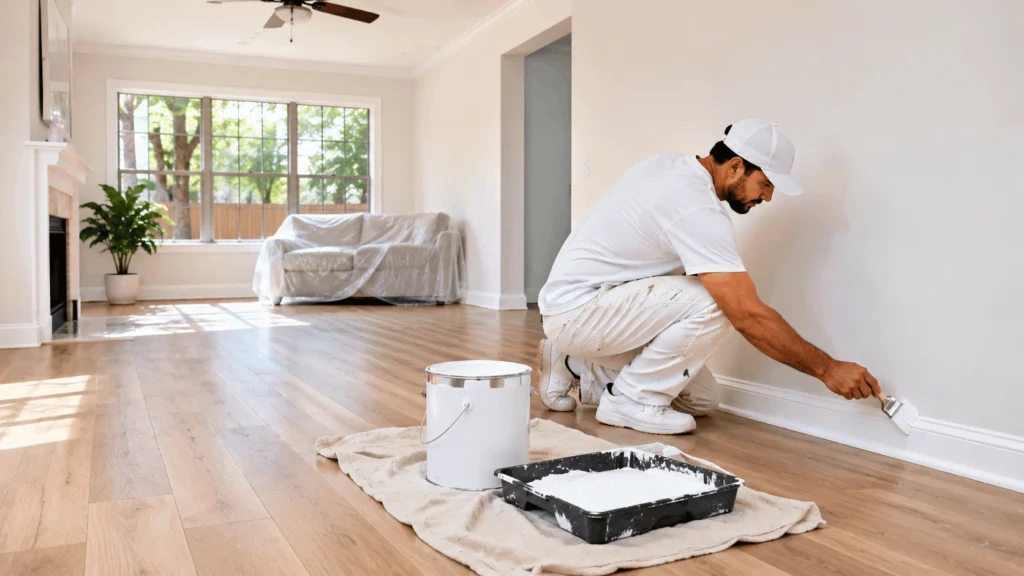
Yes, in most homes you should paint after you replace the flooring. At the very least, paint the baseboards and trim last. New floor installs often bump walls, scuff baseboards, and leave small marks. A final round of paint fixes those marks and gives you clean, sharp lines along the new floor. Carpets are the main exception. With carpet, finish all your painting first, then install the carpet last.
The answer matters because paint takes time to harden. Paint feels dry in a few hours, but latex paint can take up to 30 days to fully cure, according to Angi. Fresh paint stays soft during that time. A floor crew can scuff it fast.
If you plan new floors and fresh walls together, our team can help with interior painting in San Antonio, TX and work around your flooring schedule.
The Short Answer for Each Floor Type
Every floor type works a little differently. Here is a quick guide.
Hardwood Floors
Paint after hardwood installation. Hardwood crews cut, nail, and sand. Those steps can scratch walls and baseboards. A painter can come in after and fix every mark in one visit. If the crew refinishes your existing hardwood, sanding dust also lands on fresh paint, so painters often finish the walls after the dust clears.
Vinyl Plank and Laminate
Paint after the install in most cases. These floors go in fast, but the crew still taps boards against the wall and sets tools near the baseboards. Painting last lets you fix those spots. Vinyl and laminate also wipe clean if a drip lands on them, so painters work on them with less risk than on carpet.
Tile Floors
Paint after tile if you can. Tile work is messy. Crews mix thinset and grout, cut tile with wet saws, and spread dust and splashes. Fresh paint does not survive that mess. Paint when the tile dust settles and the grout has set.
Carpet
Paint before carpet. The carpet soaks up drips and holds paint in the fibers. Installers also need finished baseboards so they can tuck the carpet edge in a clean line. Paint the walls, the trim, and the baseboards first. Then bring in the carpet crew as the final step.
Why Painting After New Floors Gives a Cleaner Finish
Painters who work in lived-in homes often choose to paint last. Here is why.
- New floors leave marks. Crews haul in heavy rolls, boxes, and tools. Those items scrape walls and nick corners.
- Baseboards take the most damage. Flooring crews often pull baseboards off or press tools against them. Fresh paint on the baseboards will not last through that.
- Touch-ups rarely blend. Spot repairs often show up as flat or shiny patches. A full coat after the install blends better.
- You get crisp lines. A painter can cut a clean line where the baseboard meets the new floor.
- You paint once. You do not repaint the same wall twice.
This approach does ask a little more from your painter. The crew must protect the new floor with care. A skilled residential painter does this every week, so the extra step is routine.
When Painting Before New Floors Makes Sense
Painting first works well in some cases. Think about this plan if one of these fits your home.
- You are installing carpet. Carpet crews need finished walls and trim.
- You need a big color change. If you want to repaint every wall, ceiling, and the trim, painting an empty room is faster. Your painter does not need to cover and tape a new floor.
- You will tear out the old floor anyway. Old carpet or old tile can take a few drips. Nobody cares about the old floor.
- You have a tight budget. Painting first means less floor protection. That can lower the work time.
If you choose this path, plan on a touch-up visit after the flooring crew leaves. Even careful crews leave a few scuffs. Save a little paint for that visit.
The Best Order for Most San Antonio Homes
Here are three clear plans. Pick the one that matches your project.
Plan A: Hard Floors and a Professional Painter
- Move furniture out and remove old flooring.
- Install the new hardwood, vinyl, laminate, or tile.
- Let the floor settle for the time your flooring installer recommends.
- Hire a painter to cover the floor, then paint the walls, ceiling, baseboards, and trim.
- Remove the covers and enjoy a clean finish.
Plan B: Carpet
- Paint the ceilings, walls, and trim first.
- Let the paint dry for several days.
- Install the new carpet last.
- Touch up any small marks if needed.
Plan C: Budget Plan for a Big Repaint
- Paint the ceilings and walls before the new floor.
- Install the new floor.
- Paint the baseboards and trim last.
- Do a final touch-up on the walls.
Not sure which plan fits your home? Get a free painting estimate in San Antonio and our team will help you pick the right timing.
How Long Should You Wait to Paint After New Flooring?
Wait until your flooring installer says the floor can handle foot traffic and tape. Each floor type has its own rules. Glue-down vinyl, tile with fresh grout, and hardwood with a new finish all need different times. Ask your flooring crew for a clear date before you book your painter.
Also think about how long your paint will take to cure. Paint can feel dry in a few hours, but it keeps hardening for weeks. Angi lists a range of 7 to 30 days for full cure, based on the type of paint. During that time:
- Keep furniture a few inches from the walls.
- Do not hang heavy art right away.
- Do not scrub the walls.
- Peel tape off slowly.
Texas heat and humidity can slow the process. Run your air conditioner and keep the air moving. That helps paint dry and harden at a steady pace.
How Painters Protect New Floors
You do not need to worry about a new floor if the crew uses the right tools. Here is what a careful painter does.
- Lays down rosin paper or heavy paper. Paper blocks drips and lets the crew walk across the room.
- Uses low-tack painter’s tape. This tape pulls off without lifting the floor finish. The crew tests it on a small spot first.
- Covers the paper edges with tape. This stops the paper from sliding.
- Skips plastic sheets on the floor. Plastic slips under ladders and can trap moisture on some floors.
- Pads ladder feet. Soft pads keep ladder legs from denting or scratching the floor.
- Wears clean shoes or shoe covers. This keeps grit off the new surface.
- Cleans up spills right away. Wet paint wipes off a hard floor fast. Dried paint takes more work.
Ask any painter you hire how they protect floors. A clear answer shows real experience.
What to Do With Baseboards and Trim
Baseboards and trim take more abuse than any other part of the room. Flooring crews bump them. Vacuums scratch them. Even the new floor can sit a little differently along the edge.
You have three good options.
- Paint the baseboards after the floor goes in. This gives the cleanest result. The paint covers nail holes and caulk lines.
- Take the baseboards off first. Your flooring crew can remove them, install the floor, and put them back. A painter then fills the nail holes and paints them.
- Add shoe molding. This small strip covers the gap along the floor. Paint it after it goes in.
Ask your flooring installer and your painter to talk before work starts. Good teamwork saves you time and money.
Local Tips for San Antonio Homeowners
San Antonio homes come in many styles. Each style brings its own flooring and paint needs.
- Older homes in King William, Southtown, and Alamo Heights. Many of these homes have original wood floors and old trim. Hand-painted details and old boards need extra care. Plan more time for prep and protection.
- Newer homes near Stone Oak and the Medical Center area. Many have tile in the living areas and carpet in the bedrooms. Use Plan A for tile and Plan B for carpet.
- Homes with high ceilings. A painter needs tall ladders and scaffolds. Think about painting the ceiling before the new floor so heavy gear never touches your fresh floor.
- Homes near the River Walk and downtown. Condos and lofts often have building rules about work hours. Check those rules before you book flooring and paint crews.
San Antonio summers run hot and humid. Plan paint work for mornings when you can. Keep windows closed and run the AC for steady drying.
Common Mistakes to Avoid
- Painting the same day as flooring. Fumes, dust, and foot traffic clash. Space the jobs apart.
- Skipping the floor cover. One small drip can mark a new floor.
- Using strong tape on new floors. Strong tape can pull up the finish. Use low-tack tape and test it first.
- Forgetting to tell your painter about the flooring date. Your painter plans the whole job around that date.
- Moving furniture back too soon. Wait until the paint hardens. Fresh paint can peel or stick to furniture.
- Hiring two crews who never talk. Share each schedule with both teams.
Why Choose River City Painting
River City Painting is a San Antonio painting company that focuses on interior and residential painting. We help homeowners update their rooms, cover scuffs, and refresh worn walls. Many of our customers call us right after a flooring job or right before one. Both timings work when you plan ahead.
Our crew handles the full paint job from start to finish. We cover floors, tape edges, patch holes, and paint walls, ceilings, trim, and baseboards. We take extra care in rooms with new flooring. You can see our full list of professional interior painters and what they do on our interior page. If you want to learn how we work across a whole house, read about our residential painting in San Antonio, TX.
We serve homeowners across San Antonio, TX. Whether you live in a historic home near downtown or a newer home on the north side, we show up on time, keep the work area tidy, and explain each step in plain words.
Ready to book? Call us at (210) 800-4324 or request a free estimate today. Tell us your flooring date, and we will build a paint plan around it.
Conclusion
Paint after your new floors in most homes, or at least save the baseboards and trim for last. Choose carpet as the exception and paint first. Protect the floor, wait for paint to cure, and share your dates with every crew. A little planning gives you clean lines, fresh walls, and a floor that looks brand new.
Frequently Asked Questions
Wait until your flooring installer says the floor can take foot traffic, which can take a few days.
Paint them after for the cleanest finish, except with carpet, where you paint them first.
Wet paint wipes up fast, but dried paint is hard to remove, so cover the floor well.
Paint feels dry in hours, but most latex paint needs up to 30 days to fully cure.
Call a local residential painter who covers floors with care, like River City Painting at (210) 800-4324.