
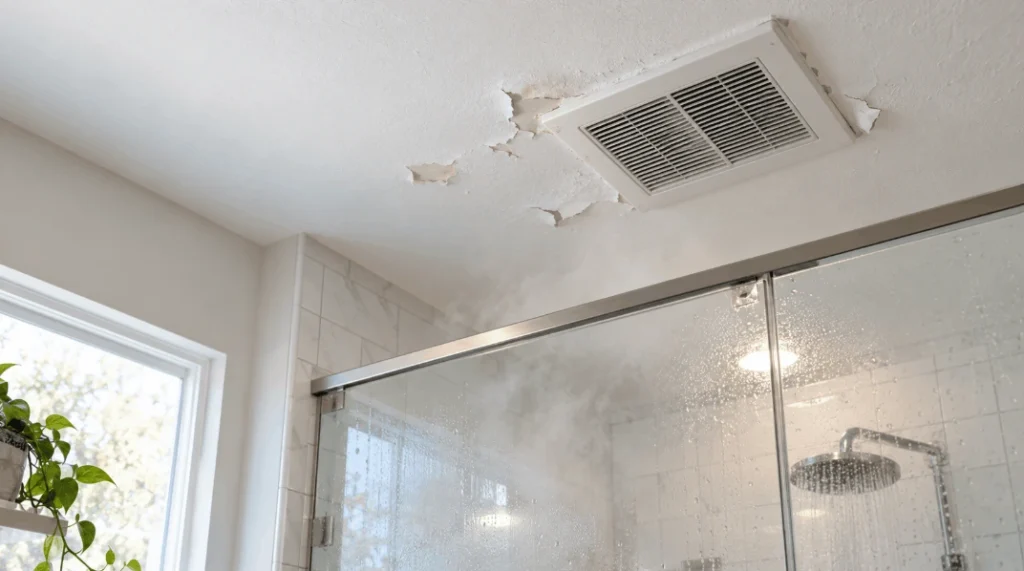
Bathroom ceiling paint keeps peeling with no leak because steam does the damage. Hot shower air rises, hits the cooler ceiling, and turns into tiny drops of water. The paint soaks up that water, swells, and lets go. Weak fans, skipped primer, the wrong paint, and a dirty surface make the problem worse.
The numbers back this up. The U.S. Environmental Protection Agency (EPA) says indoor humidity should stay below 60 percent, and ideally between 30 and 50 percent. A hot shower adds a lot of moisture to a small room, so most bathrooms miss that mark every day. The EPA also says paint over a damp or moldy surface will likely peel.
Bathroom ceilings can be difficult to keep painted, especially in rooms with poor ventilation. In one home in Mountain Brook, Alabama, the drywall had not been primed before painting. Frequent hot showers and limited airflow caused the paint to peel off in large sheets. The solution involved scraping away the loose paint, smoothing the surface, applying primer, and repainting the ceiling. Additional ventilation fans were also installed to help prevent future peeling.
That story sounds familiar to many San Antonio homeowners. You fix the ceiling, and a few months later the flakes come back. Let’s look at why, and how to stop it.
The 7 Hidden Reasons Your Bathroom Ceiling Paint Keeps Peeling
A leak is not the only way water gets into paint. Here are the seven causes painters see most.
1. Steam Turns Into Water on the Ceiling
Bathroom ceiling paint often starts peeling because of repeated moisture exposure. When warm shower steam reaches a cooler ceiling, it condenses into tiny water droplets, even if you cannot see them. The moisture causes the paint film to swell. As the ceiling dries, the paint contracts. This repeated cycle weakens the paint’s bond with the surface, eventually causing it to crack, bubble, or peel. Proper bathroom ventilation and the right paint can help prevent moisture-related paint damage.
2. A Weak or Short-Run Exhaust Fan
A fan that hums does not always move air. An old or cheap fan can spin well and still pull out very little steam.
Run time matters too. If you shut the fan off when you step out of the shower, the steam stays behind. The EPA tells people to run the bathroom fan or open a window during showers.
One Just Answer home improvement thread shows how common this is. A homeowner had two exhaust fans and still had peeling paint. The expert said weak fans likely did not remove enough moisture.
3. No Primer on Bare Drywall
Bare drywall drinks paint like a sponge. Without a primer, the paint cannot bond well.
Inspirations Paint, a paint retailer, explains that painters in the 1980s often rolled flat ceiling paint straight onto bare drywall. The paint never bonded well. It flaked as the years passed. Older homes in areas like Monte Vista or Government Hill may still have this problem hiding under the paint.
4. Standard Ceiling Paint in a Wet Room
Standard flat ceiling paint can hide minor surface imperfections, but it often struggles in humid bathrooms. For bathroom ceiling painting, choose a moisture-resistant paint designed to withstand frequent humidity and condensation.
Mildew-resistant bathroom paint offers better protection against moisture-related problems. A satin or semi-gloss finish can also provide a more washable, moisture-resistant surface than flat paint, making it a practical option for bathrooms with frequent steam exposure.
5. Old Paint Layers That Fight Each Other
Sometimes, peeling bathroom ceiling paint starts with the old paint rather than the new coat. Applying water-based acrylic paint over an incompatible or poorly bonded enamel finish can cause adhesion problems. As temperatures change, the layers may respond differently to expansion and contraction, causing the top coat to crack or peel. Even when the new paint adheres properly to the old finish, it can still come off if the underlying layer loses its bond with the ceiling. Proper surface preparation and compatibility checks are essential before repainting.
6. Dirt, Soap Film, and Mildew Under the Paint
Paint grips clean, dry surfaces. It does not grip hair spray, soap mist, dust, or a thin layer of mildew.
The EPA says not to paint over moldy surfaces. Clean the mold first and dry the surface completely. Paint over mold will likely peel.
7. Drywall Problems You Cannot See
Moisture can weaken the paper face of drywall. Loose tape, old patches, and popped screws can also push paint off the surface.
A good paint job cannot hold on a weak base. This is where drywall repairing in San Antonio, TX, matters as much as the paint itself.
Is It Really Leak-Free? Four Quick Checks
Before you repaint, rule out a hidden leak. These checks take five minutes.
- Press the ceiling. A soft or sagging spot points to water behind the drywall.
- Look for rings. Brown or yellow rings mean water has reached the ceiling before.
- Check for rust. Rusty screws, vent covers, or sprinkler heads mean moisture sits in the room. In a Bunnings home improvement thread, an expert said a rusty sprinkler head and mold at the ceiling edges showed that humidity was not leaving fast enough.
- Look above. Check the upstairs bathroom, the attic, and the roof after a rain.
If you find a leak, fix it first. Call a plumber or roofer. Painting over an active leak wastes your money.
Why San Antonio Bathrooms Face Extra Moisture
San Antonio has a humid subtropical climate. Summers run hot and sticky. Warm, wet air from outside leaks into homes, and your air conditioner cools the ceiling. A warm, steamy bathroom next to a cool ceiling is a perfect setup for condensation.
This is true from Southtown to Stone Oak. It also hits homes near the River Walk and in Alamo Heights, where older ceilings may hold many layers of paint.
Porch and patio ceilings fight the same battle. If you see peeling there, our team offers exterior painting for porch ceilings and eaves in San Antonio as well.
How to Fix Peeling Bathroom Ceiling Paint Step by Step
Small patches are a good DIY job. Large areas take more time and skill. Follow these steps in order.
- Protect yourself and the room. Wear gloves, goggles, and an N-95 mask. Cover the tub, sink, and floor with drop cloths.
- Scrape all loose paint. Use a putty knife or paint scraper. Keep scraping until only firm paint stays.
- Clean the surface. Scrub off soap film, dust, and mildew with detergent and water. The EPA does not recommend bleach as a routine step. If you use any strong cleaner, open a window and never mix it with other cleaners.
- Let it dry fully. Run the fan and open the door. Wait until the ceiling feels dry to the touch.
- Repair the drywall. Fill cracks and holes. Skim rough edges where paint peeled away. Sand smooth and wipe off the dust.
- Prime the whole area. Use a stain-blocking or mold-resistant primer. Primer gives the paint something to grab.
- Paint with bathroom paint. Pick a mildew-resistant paint in a satin or semi-gloss sheen. Apply two thin coats and let each coat dry.
- Paint the whole ceiling. A JustAnswer expert warns that shower moisture spreads across the entire ceiling. Fixing one spot often leads to a new peel next to it.
Want a clean finish without the ladder work? Our team can handle the prep, priming, and painting. Check our interior painting services in San Antonio, TX and see how we protect your bathroom from the next steam cloud.
Mistakes That Make the Paint Peel Again
Most repeat peeling comes from a few quick shortcuts.
- Painting over loose flakes. The new paint holds on to old paint that has already let go.
- Painting over mold. The EPA says this will likely peel.
- Spot painting. The patch looks different, and the nearby paint keeps failing.
- Skipping primer. Paint alone cannot seal bare drywall.
- Using flat ceiling paint. It hides flaws but takes in more moisture.
- Turning off the fan too soon. The steam stays in the room and goes straight to the ceiling.
How to Keep Bathroom Ceiling Paint From Peeling Again
A good repair lasts longer when you also cut the moisture. These habits help a lot.
- Run the fan during every shower. Keep it on for about 20 to 30 minutes after, so the steam can leave. (Many pros suggest this range, though your fan may need more or less time.)
- Open the door or window. The EPA lists this as a top way to cut humidity.
- Measure the humidity. A small humidity meter costs about $10 to $50, according to the EPA. Aim for 30 to 50 percent.
- Clean the fan cover. Dust blocks airflow and cuts how much steam leaves.
- Wipe down mildew early. Scrub small spots with detergent and water before they spread.
- Dry wet areas fast. The EPA says to dry water-damaged areas within 24 to 48 hours to stop mold.
- Upgrade the fan if needed. If the paint keeps failing, the fan may simply be too weak for the room.
When to Call a Professional Painter
Some jobs go beyond a weekend project. Call a pro if you see any of these signs:
- Paint falls off in large sheets
- The drywall feels soft, cracked, or sags
- Mold covers a large area (the EPA suggests extra care when mold grows beyond about 10 square feet)
- You have fixed the ceiling more than once
- You do not know what lies under the old paint
A good painter finds the real cause first. Then the painter fixes the surface, seals it, and paints it with the right product.
Ready to stop the repeat repairs? Get a free painting estimate in San Antonio, and our team will look at your ceiling, find the cause, and give you a clear price. If the drywall needs work, we handle that too, so you only deal with one crew.
Why Choose River City Painting
River City Painting is a San Antonio, TX painting company that focuses on interior painting and drywall repairing. That mix matters for a peeling bathroom ceiling. The paint and the drywall work as a team. If the surface under the paint is weak, even the best paint will fail. Our crew fixes both, so you do not need to hire two companies.
We take time to find out why your paint peels. We check the surface, the moisture level, and the old paint layers before we pick a plan. Then we scrape, repair, prime, and paint with products that suit a steamy room. We also give you simple tips to keep the new finish strong, like how long to run your fan.
We serve homeowners across San Antonio and treat each home with care. We also paint exteriors, from porch ceilings to eaves and siding. Our goal is simple. You should enjoy your bathroom, not stare at flakes on the ceiling.
Have questions? Call us at (210) 800-4324, or request your free estimate online. We are happy to look at your ceiling and tell you the real cause.
Conclusion
Bathroom ceiling paint peels with no leak because steam, weak airflow, and poor prep break the paint bond. Fix the moisture, clean and dry the surface, repair the drywall, prime it, and use bathroom paint. Then run the fan after every shower. These steps give your new paint its best chance to last.
FAQs
Yes, steam alone can soak the paint and make it peel over time.
Paint the whole ceiling, because shower moisture reaches every part of it.
A mildew-resistant bathroom paint in satin or semi-gloss usually holds up best.
Many painters suggest 20 to 30 minutes, and the EPA says to run the fan during showers.
Yes, primer helps the new paint bond and blocks stains and moisture.