

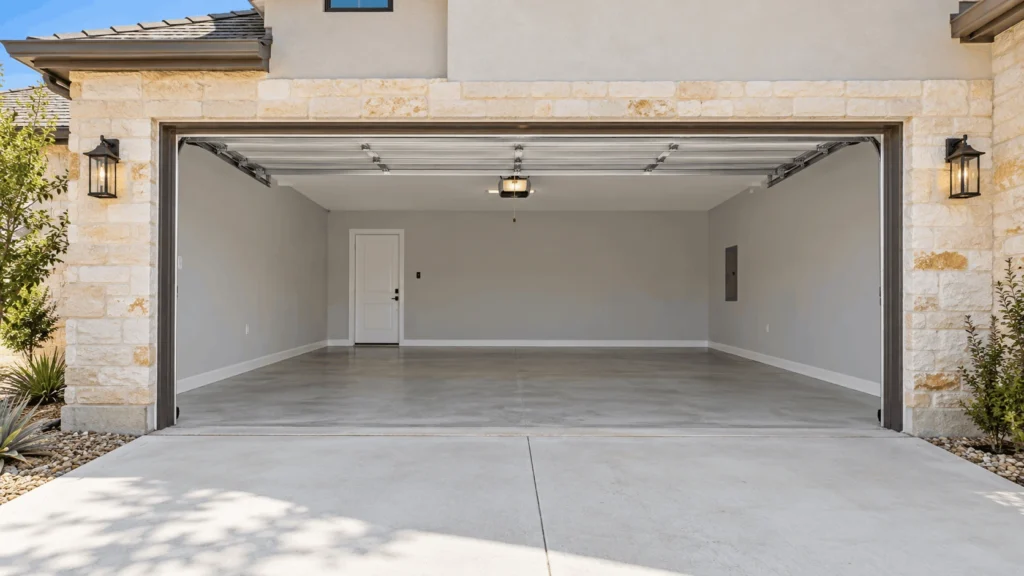
To paint a garage in San Antonio, clean the walls, patch the cracks, prime the bare spots, and roll on two coats of washable satin or semi-gloss paint. Pick a paint made for hot, damp spaces. Paint on a dry day when the air is not too hot. Follow these steps, and your garage walls will stay fresh for years.
Your garage works harder than most rooms in your home. A survey of more than 900 U.S. homeowners by Home Innovation Research Labs, done for The Wall Street Journal, shows how hard. In that survey, 93 percent of owners store items in the garage, and 84 percent park there. About half also use it as a work space. All that use leaves scuffs, dust, and grime on the walls.
Big paint brands know this. Sherwin-Williams shares its own garage painting steps. They start with a good wash, then tape, then primer. This guide builds on that same simple order and adds tips for San Antonio heat and humidity.
Why Garage Painting in San Antonio Is Different
San Antonio summers are hot. Garages trap that heat. Hot walls can dry paint too fast, and fast drying causes lap marks and weak spots. Humid days can also slow drying and let mildew grow on bare walls.
Here is what that means for you:
- Paint early in the morning or on a mild day.
- Open the garage door to move air, but keep dust out.
- Use a mildew-resistant paint for walls and ceilings.
- Give each coat plenty of time to dry.
Garages also see dirt from tires, oil, lawn tools, and bikes. Your walls need a tougher finish than a bedroom does. That is why the paint type and the prep work matter so much.
What You Need Before You Start
Gather your supplies first. You will save many trips to the store.
Cleaning and repair supplies
- Degreaser or mild soap
- Bucket, sponge, and a stiff brush
- Scraper and sanding block
- Spackle or patching compound
- Caulk for gaps around trim
Painting supplies
- Stain-blocking primer
- Satin or semi-gloss paint
- Roller, roller covers, and an extension pole
- Angled brush for corners and trim
- Painter’s tape and drop cloths
- Ladder, gloves, and safety glasses
Buy a little more paint than you think you need. Run out in the middle of a wall, and the new batch may look different.
How to Paint Your Garage Step by Step
Step 1: Clear the Garage
Move cars, bikes, and shelves out of the way. Pull items at least a few feet from each wall. Cover whatever you cannot move with plastic or drop cloths. This gives you room to work and keeps paint off your things.
Step 2: Clean the Walls
Dirt blocks paint from sticking. Wipe or scrub the walls with soap and water. Use a degreaser on oil spots near where the cars park. Rinse the walls and let them dry fully. Clean walls are the base of every good garage paint job.
Step 3: Repair Cracks and Holes
Scrape off loose or peeling paint. Fill holes and cracks with spackle. Let it dry, then sand it smooth. Caulk the gaps along trim and corners. Wipe away the dust with a damp cloth.
Step 4: Check for Moisture and Mildew
Look for dark spots, white powder, or soft drywall. These signs point to a leak or damp wall. Paint will not fix a water problem. Find the source and repair it first. If you see mildew, scrub it with a cleaner made for mildew, then rinse well.
Step 5: Tape and Protect
Tape off the trim, windows, outlets, and the edge of the floor. Lay drop cloths along the base of each wall. Take a few extra minutes here. Clean lines make the whole garage look finished.
Step 6: Prime the Walls
Primer helps paint stick and blocks old stains. Bare drywall, patched spots, and stained areas all need it. Use a stain-blocking primer. Cut in the edges with a brush, then roll the open areas. Let the primer dry as the label says.
Skipping primer is one of the top reasons garage paint fails early. It can peel, look blotchy, or let old stains show through.
Step 7: Paint the Edges and Walls
Start with the edges. Use an angled brush along the corners, trim, and ceiling line. Then roll the large areas. Work in small sections from top to bottom. Keep a wet edge so the paint blends. Let the first coat dry, then add a second coat.
Step 8: Remove Tape and Clean Up
Pull the tape off at a slight angle while the last coat is still a little soft. Wash your brushes and roller covers. Seal leftover paint tightly and label the lid with the color name. You will thank yourself later when you need a touch-up.
Which Paint Works Best for Interior Garage Painting
The right paint saves you from repainting too soon. Look for these features:
- Washable finish. You can wipe off dirt and scuffs.
- Satin or semi-gloss sheen. Flat paint shows every mark. Satin and semi-gloss clean up much easier.
- Mildew resistance. This helps in humid weather.
- Low odor. Garages share walls with living spaces, so low-odor paint helps.
Light colors, like soft white, light gray, or greige, make a garage feel bigger and brighter. They also help if you use the space as a workshop. Darker colors look bold, but they show dust and scratches more.
Painting the Ceiling, Garage Door, and Trim
Many owners paint only the walls. A full refresh looks much better.
The Ceiling
Paint the ceiling first. Drips fall down, so you want to fix them while you still have walls to paint. Use a flat or matte ceiling paint. Wear safety glasses and keep your head back.
The Interior Side of the Garage Door
The inside of the garage door often looks tired. Clean it well, prime any bare metal, and use a paint made for metal or doors. Do not paint the door tracks or springs.
Trim and Door Frames
Trim takes the most wear. Sand it lightly, wipe off the dust, and use a semi-gloss paint. This gives a clean, crisp edge.
What About the Garage Floor?
Wall paint is not floor paint. Garage floors need a coating made for concrete, such as epoxy. Concrete needs cleaning, moisture checks, and extra prep. Treat the floor as a separate project. If you want a full garage makeover, paint the walls first. That way, dust and drips will not land on a fresh floor.
Safety Tips for Older San Antonio Homes
Does your home date from before 1978? Then the paint may contain lead. The U.S. Environmental Protection Agency says about three-quarters of homes built before 1978 still contain some lead-based paint. Sanding and scraping can create harmful dust. Read the EPA lead-safe painting rules before you sand or scrape. If your home is older, hire a lead-safe certified contractor.
San Antonio has many older neighborhoods. Areas like Alamo Heights, Monte Vista, and King William have plenty of charming homes built long ago. If you live in one, test the paint before you start.
Also, always keep the garage door open and wear a mask when you sand or spray.
What Affects the Cost of Garage Painting?
Prices change from home to home. These factors matter most:
- The size of the garage, one car or three
- The wall and ceiling condition
- The amount of repair and prep work
- The paint type and quality
- Whether you add the door, trim, or ceiling
- How much you need to move or cover
A garage with smooth walls and few repairs costs less than one with peeling paint and water stains. The best way to get a true price is to ask a pro to look at it.
DIY or Hire a Pro?
You can paint a garage yourself if you have time, a good ladder, and patience. It is one of the easier home projects. But the job takes more work than most people expect. Prep alone can take a full day.
Think about hiring a pro if:
- Your garage is large or has a high ceiling.
- You see peeling, stains, or damp spots.
- Your home is older and may have lead paint.
- You want a smooth, even finish without the stress.
- You do not have a free weekend.
If you want help, our professional interior painters in San Antonio can handle the cleaning, repairs, priming, and painting for you. You get a clean, tough finish and your weekend back.
Common Garage Painting Mistakes to Avoid
Most paint problems start before the first coat. Watch for these:
- Skipping the wash. Paint will not stick to dust and grease.
- Skipping primer. Stains bleed through and paint peels.
- Painting over damp walls. Moisture pushes paint off the wall.
- Using flat paint. It scuffs and stains too easily.
- Painting in peak heat. Paint dries too fast and looks uneven.
- Rushing the dry time. Soft paint marks and chips.
Avoid these six, and your finish will last far longer.
How Long Does Garage Painting Take?
A small garage can take a weekend for a DIY painter. A larger two or three car garage may take longer, since you need time to clean, repair, prime, and add two coats. Dry time between coats adds up, so plan ahead. A pro crew usually finishes faster because they bring the tools and the practice.
Ready to skip the guesswork? Get a free garage painting estimate and we will tell you what your garage needs.
Why Choose River City Painting
River City Painting is a San Antonio painting company that focuses on homes. We paint the inside and outside of houses, and we treat every garage as part of the home, not an afterthought. When you hire us, you get a team that cares about prep, clean lines, and a finish you can trust.
Our work covers interior painting, exterior painting, and full residential painters who care for your San Antonio home services. A garage project fits right in. We can paint the walls, ceiling, trim, and the inside of the door. If you want a matching look, we can also refresh your front door or the outside of the home at the same time.
We serve homeowners across San Antonio. Whether you live near the River Walk, in Alamo Heights, around the Pearl, or out in Stone Oak, we come to you. We explain each step in plain words, we answer your questions, and we respect your time and your property.
Want a garage that looks as good as the rest of your home? Call us at (210) 800-4324 or ask for a free quote online. We will visit, look at your walls, and give you a clear plan.
Conclusion
A good garage paint job comes down to three things: clean walls, solid prep, and the right paint. Take your time with each step, and plan around the San Antonio heat. Whether you roll the paint yourself or hire a pro, a fresh garage makes your whole home feel cared for.
Frequently Asked Questions
Yes, but paint early in the morning or on a mild day so the paint does not dry too fast.
Yes, use primer on bare drywall, patched spots, and stains so the paint sticks and lasts.
Satin or semi-gloss works best because you can wipe it clean.
Follow the paint can label, since dry times change with heat and humidity.
No, use a concrete coating made for floors, such as epoxy.