

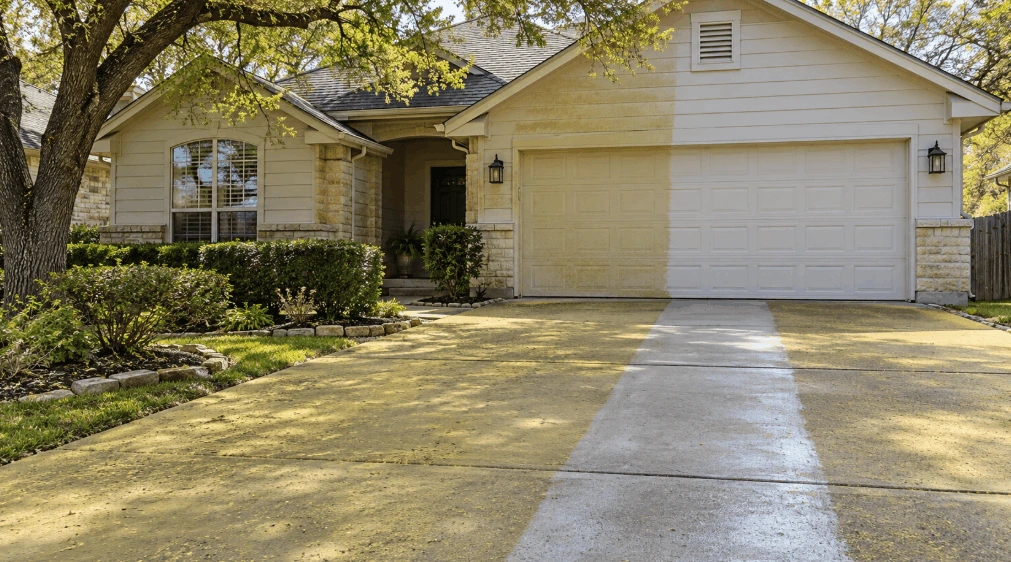
Pollen buildup coats your siding, paint, roof, gutters, and driveway with a sticky film. That film traps moisture, feeds mildew and algae, dulls your paint, and turns concrete slick. In San Antonio, pollen falls for most of the year, so small stains can turn into costly repairs if you ignore them.
The facts back this up:
- The Asthma and Allergy Foundation of America says more than 106 million people in the U.S. have allergies or asthma. Its 2026 Allergy Capitals report also says warmer weather is making pollen seasons longer and stronger.
- KSAT meteorologist Sarah Spivey reports that oak pollen peaks in late March and early April around the Alamo City and the Hill Country. She also notes that oak leaves pile up on lawns, patios, and sidewalks.
- Wyndly, an allergy care brand, says cedar season in San Antonio runs from December to February.
- KENS 5 reported in March 2026 that Dr. Edward Brooks, an allergist at UT Health San Antonio, sees elm, mesquite, and other trees pollinate at the same time as oak.
Here is how that yellow dust hurts your home, and what you can do about it.
Why San Antonio Homes Get So Much Pollen
Pollen never fully leaves San Antonio. It just changes shape through the year.
- Cedar: December to February
- Oak: March to May
- Grass: summer
- Ragweed: fall
Cedar pollen blows in from the Hill Country on winter wind. Oak takes over in March. Local allergy guides say homes on the North Side, near Stone Oak and Helotes, often see higher cedar counts because they sit closer to the Hill Country. Live oaks also shade many older neighborhoods, like Alamo Heights and Monte Vista, so those homes catch a lot of oak dust and leaves.
Dry wind spreads the pollen. Then dew or a Texas storm turns that dust into a sticky film. That is when the real damage starts.
What Pollen Does to Your Home’s Exterior
Pollen Dulls and Stains Your Paint
Pollen is sticky. When dew or rain hits it, it turns into a thin paste that clings to your paint. The strong Texas sun then bakes that film onto the surface.
The result looks like yellow or green stains and a tired, older finish. On rough surfaces like stucco, brick, and limestone, pollen sinks into tiny pits. A quick rinse will not pull it out. Over time, the film can wear on the coating and shorten the life of your paint.
Pollen Feeds Mildew and Algae
Pollen is organic matter. It holds water and gives mold, mildew, and algae a place to start. Shady walls, north sides, and areas near sprinklers suffer first.
You may see black or green streaks on siding, fences, and roof shingles. San Antonio’s humid spells and heavy storms speed this up. If you leave the growth alone, it spreads and stains deeper.
Pollen Clogs Gutters and Downspouts
Oak catkins and pollen mix with leaves and dirt to form a thick sludge. That sludge blocks your gutters. Water then spills over the edge and runs down your walls, trim, and foundation.
Standing water in clogged gutters also draws mosquitoes. After a big downpour, a blocked gutter can cause real water damage in a single day.
Pollen Makes Driveways and Walkways Slick
When pollen gets wet, it leaves a slippery layer on concrete, pavers, and steps. Slip risk goes up near front doors, pool decks, and shaded walkways. Pollen also stains porous concrete, so your driveway looks dirty even after a sweep.
Pollen Hides on Windows, Screens, and Patios
Pollen blocks your view, clogs window screens, and stains patio furniture and wood decks. It settles in cracks and grooves, so it keeps coming back after a light wipe. A dirty exterior also hurts your curb appeal, which matters if you plan to sell.
Signs Pollen Is Already Hurting Your Exterior
Walk around your home and look for these signs:
- A yellow or green film on siding, trim, or windows
- Dark streaks on walls, fences, or roof shingles
- Chalky, faded, or rough paint
- Water spilling over the gutters
- Slick spots on the driveway or steps
- Peeling or bubbling paint near stained areas
Try a quick test. Rub your hand on a sunny wall. If your palm comes back chalky or sticky, dust and grime have built up on the paint.
How Power Washing Removes Pollen the Right Way
A garden hose pushes pollen around, but it leaves the sticky film behind. Professional power washing lifts that film out of the pits in stucco, brick, and concrete.
Control matters most. Too much pressure can gouge wood, chip old paint, and force water behind siding. A skilled crew uses lower pressure on soft surfaces and a mild cleaner that breaks down pollen, mildew, and algae. If you want the job done safely, book professional power washing services in San Antonio, TX and let the crew match the method to each surface.
A good pollen wash follows these steps:
- Cover outlets and lights, and wet nearby plants.
- Apply a cleaner that loosens pollen and organic growth.
- Rinse from top to bottom so dirty water does not streak clean areas.
- Clean the driveway, walkways, fences, and patios.
- Let everything dry before you paint, seal, or decorate.
Tired of yellow dust in your home? Call River City Painting at (210) 800-4324 and ask about a pollen wash.
The Best Time to Wash Your Home
Timing matters in San Antonio because the seasons overlap. Wash in early spring after cedar fades, and wash again in late spring after oak season ends. Add a fall wash to clear ragweed dust and get ready for winter cedar. Most homes do well with two washes a year, and homes under heavy oaks may need three.
When to Repaint After Pollen Damage
Washing cleans your home, but it does not fix worn paint. Look for peeling, cracks, chalk, or bare wood. Bare spots let water in, and water leads to rot. If you see these signs, plan to repaint soon.
Great results start with good prep. Follow this order:
- Wash the surface to remove pollen and mildew.
- Let it dry fully.
- Scrape loose paint and repair cracks.
- Prime bare spots.
- Apply fresh paint in even coats.
Pollen adds one more rule. Paint on calm days with a low pollen count. Wet paint grabs floating pollen and locks it in, and that ruins the finish. KSAT posts a pollen count each morning, so check it before you start.
Washing right before you paint also helps your new coat stick better. That is why many San Antonio homeowners pair a wash with exterior painting services in San Antonio, TX in the same project. A fresh coat of quality paint also gives your walls a tougher shield against the next round of dust.
A Simple Year-Round Pollen Plan for San Antonio Homes
Use this plan to stay ahead of the buildup:
- Winter (December to February): Rinse windows after windy cedar days. Check gutters for debris.
- Spring (March to May): Sweep oak catkins off walkways and out of gutters. Book a wash once oak season slows down.
- Summer: Look over your paint for cracks, chalk, and peeling. Fix small spots before storms hit.
- Fall: Schedule a wash and gutter cleaning. Plan any repainting before cedar returns.
Not sure what your home needs? Call (210) 800-4324 and ask River City Painting for a quote.
Easy Tips Between Professional Washes
You can keep pollen down with a few simple habits:
- Rinse dusty surfaces gently with a garden hose, starting at the top.
- Use a soft brush and mild soap on small stains.
- Skip high pressure on stucco, wood, and old paint.
- Trim branches that hang over your roof and gutters.
- Sweep walkways and patios often during oak season.
- Wipe outdoor furniture before you use it.
Why Choose River City Painting
River City Painting helps San Antonio homeowners protect and refresh their exteriors. We focus on two jobs that work well together: power washing and exterior painting. Pollen harms both the surface and the paint on it, so one call can solve both problems.
Our power washing removes pollen, mildew, algae, and grime from siding, brick, stucco, fences, and concrete. We match the wash method to each surface, so we clean deeply without harm. When your paint has already worn thin, our painters prep the surface and apply a fresh coat that looks sharp and lasts. You do not need to juggle two companies or two schedules.
We work with homeowners across San Antonio, from North Side neighborhoods near the Hill Country to older homes close to downtown, the Pearl, and the River Walk. Every home in the Alamo City faces the same pollen cycle, and we know how to plan around it.
We keep the process simple. We look at your home, explain what pollen has done, and give you a clear plan. You get honest advice on whether you need a wash, a repaint, or both. Ready to start? Call River City Painting at (210) 800-4324, or learn more about our power washing in San Antonio service today.
Conclusion
Pollen is more than an allergy problem. It stains paint, feeds mildew, clogs gutters, and makes surfaces slick. In San Antonio, it never fully stops. Wash your exterior on a schedule, fix worn paint early, and watch for warning signs. Small steps now save you money later.
FAQs
Two times a year works for most homes, once after oak season and once before winter cedar season.
A hose clears loose dust, but it will not lift the sticky film that clings to stucco or brick.
Yes, the film traps moisture, stains the surface, and can wear down paint over time.
Yes, when a pro uses low pressure and the right cleaner.
Repaint when you see peeling, chalking, or bare spots after your wash.