

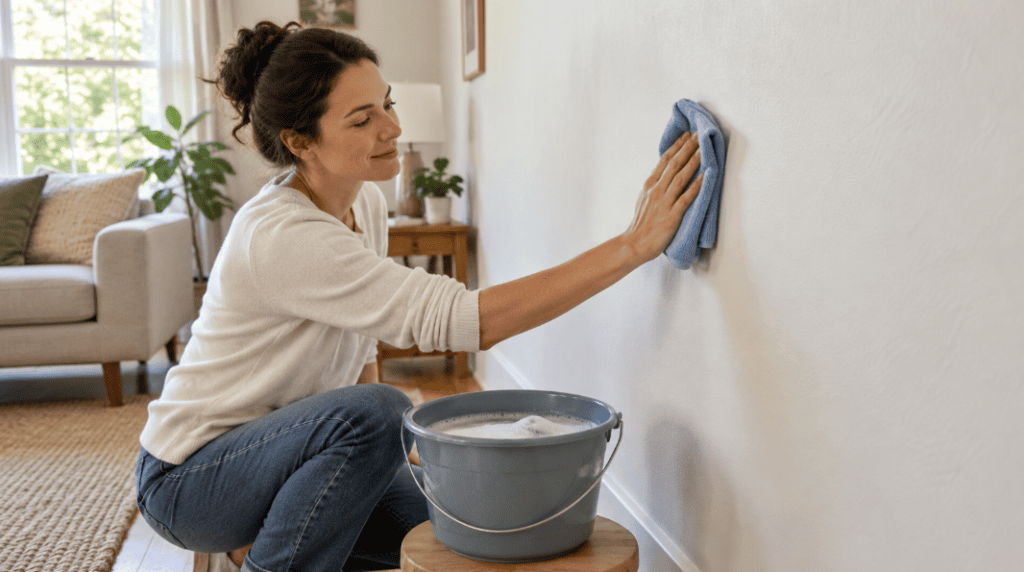
You can clean painted walls without removing the paint. Dust the wall first. Then wipe it with a soft cloth and warm water mixed with a few drops of mild dish soap. Use light pressure, rinse with a damp cloth, and dry the wall with a clean towel. Skip harsh cleaners and rough pads, because they strip paint fast.
Clean walls matter more than most people think. The U.S. Environmental Protection Agency says Americans spend about 90 percent of their time indoors, where some pollutants run two to five times higher than outdoors. Dust and grime on your walls add to that. Sherwin-Williams also agrees on the basics. In its wall cleaning guide, the brand says mild soap and warm water work best, and too much water can hurt your paint. It also tells homeowners to wait at least two weeks after painting before they wash a wall.
Big paint brands share the same idea. Dulux sells a washable matt paint that makes spills bead up so you can wipe them away. Paint makers build their products for gentle cleaning. Your job is to clean the same way: soft, slow, and light.
This guide shows you how. You will learn the tools, the steps, the stain fixes, and the mistakes to skip.
What You Need Before You Start
Gather a few simple items first. You likely have all of them at home.
- Two or three soft microfiber cloths
- A soft sponge (no rough side)
- A clean bucket
- Warm water
- Mild dish soap
- A vacuum with a brush head
- Baking soda for spot stains
- A dry towel
- A step stool for high spots
Test your mix in a hidden spot first. Try behind a couch or inside a closet. Wait until the spot dries. If the color stays the same, you can clean the rest of the wall.
How to Clean Painted Walls Step by Step
Follow these steps in order. Each one protects your paint.
Step 1: Dust the Wall First
Dust turns into mud when it gets wet. So remove it before you add water.
Run a vacuum brush over the wall. Start at the top and move down. You can also use a dry microfiber cloth. Do not use a feather duster, because it pushes dust around instead of lifting it.
Do not forget the corners and the top edge near the ceiling. Cobwebs hide there.
Step 2: Mix a Gentle Cleaner
Add a few drops of mild dish soap to a bucket of warm water. Stir it a little. You want light suds, not a foamy mess.
More soap does not mean more cleanliness. Extra soap leaves a sticky film. That film attracts dirt and leaves streaks.
Step 3: Dampen the Cloth and Wring It Out
Dip your sponge or cloth in the mix. Then wring it out well. The cloth should feel damp, not wet.
Water is the top enemy of painted walls. Too much water can leave marks, lift paint, or swell the drywall under it.
Step 4: Wipe in Small Sections
Work on a small area, about two feet wide. Start at the top and move down. Use light pressure. Move in soft circles or gentle strokes.
Let the soap do the work. If you press hard, you can rub off the paint or leave shiny spots on flat paint.
Step 5: Rinse With a Clean Damp Cloth
Dip a fresh cloth in plain warm water. Wring it out. Wipe the section you just washed. This step removes soap that stays behind.
Step 6: Dry the Wall Right Away
Pat the wall with a dry towel. Then open a window or turn on a fan. Fast drying stops streaks and water stains.
Repeat the same steps on the next section. Overlap the edges a little so you do not leave lines.
How to Remove Common Stains Without Hurting Paint
Some marks need a bit more help. Use the gentlest fix first. Test each one in a hidden spot.
Fingerprints and Hand Marks
Use the basic soap and water mix. Dab the mark with a damp cloth. Then rinse and dry. Most fingerprints come off in one or two tries.
Grease Splatter in the Kitchen
Grease builds up near the stove. Mix one cup of warm water, one cup of white vinegar, and a few drops of dish soap. Wipe the spot gently. Rinse with clean water right after. Dry the wall.
Vinegar works well on many paints. Still, test it first, because some finishes react to acid.
Crayon and Pencil Marks
Mix baking soda and water into a soft paste. Rub it on the mark with a damp cloth. Use tiny circles. Wipe the paste off with a clean cloth.
Baking soda is a mild scrub. Go slowly on flat or matte paint, since it can dull the spot.
Scuff Marks From Furniture and Shoes
Scuffs often sit on top of the paint. A damp cloth with a little soap often lifts them. For tough scuffs, use the baking soda paste. Keep your touch light.
Smoke, Steam, and Mildew Spots
Bathroom walls gather steam and sometimes mildew. Wipe small spots with mild soap and warm water. Dry the wall well. Turn on the exhaust fan every time you shower.
Avoid bleach on most painted walls. It can fade the color. If mildew keeps coming back, call a pro. Mildew often points to a moisture problem behind the wall.
Clean by Paint Finish
Your paint finish changes how hard you can wash. Use this guide.
- Flat or matte paint: This finish is the most delicate. It soaks up stains and scuffs easily. Spot clean with a damp cloth and use almost no pressure.
- Eggshell paint: This finish handles light washing. Use a soft cloth and mild soap.
- Satin paint: This finish takes regular cleaning well. It works in hallways and family rooms.
- Semi-gloss and gloss paint: These finishes handle scrubbing best. You often see them in kitchens, baths, and trim.
If you do not know your finish, assume it is delicate. Clean softly and test first.
Mistakes That Take Paint Off the Wall
Many homeowners ruin good paint with good intentions. Avoid these common errors.
- Scrubbing hard with a rough sponge
- Using steel wool or scouring pads
- Soaking the wall with water
- Using strong cleaners with ammonia or bleach
- Washing new paint too soon
- Skipping the test spot
- Letting the wall stay wet
New paint needs time to cure. Wait at least two weeks before you wash it. Some paints need longer. Check the can for the exact time.
Easy Homemade Wall Cleaner Mixes
You do not need costly products. These simple mixes work on most walls.
Everyday mix
- One gallon of warm water
- One teaspoon of mild dish soap
Grease mix
- One cup of warm water
- One cup of white vinegar
- A few drops of dish soap
Scuff and crayon paste
- Baking soda
- A little water
Always rinse after you use any of these. Always dry the wall too. Want help picking the right finish for a busy room? Our team at River City Painting can guide you through interior painting services in San Antonio and suggest paint that cleans up easily.
Tips to Keep Your Walls Clean for Longer
A little care each week saves you hard work later.
- Dust your walls once a month with a vacuum brush or dry cloth.
- Wipe fresh spills right away, before they dry.
- Keep shoes by the door to cut down on dirt.
- Turn on the kitchen fan when you cook.
- Use the bath fan after every shower.
- Clean hand marks near light switches and doors often.
- Keep a small can of touch-up paint for quick fixes.
San Antonio homes face a few extra challenges. Hot summers mean you run the AC a lot, and AC airflow carries dust to your walls. Spring brings pollen and windy days. Older homes in areas like Alamo Heights and Southtown can also have more dust from old vents. Plan a full wall dusting two times a year to stay ahead.
When to Repaint Instead of Clean
Cleaning cannot fix every wall. Sometimes the paint is simply worn out. Look for these signs.
- The paint peels or flakes
- Stains come back after you clean them
- The wall looks dull or chalky
- You see cracks or bubbles
- The color faded in sunny spots
- Scrubbing leaves bare patches
If you see two or three of these signs, repainting is the smarter move. A fresh coat also makes walls tougher to stain. Washable paint in a satin or eggshell finish works well for kids’ rooms and hallways.
Ready for a fresh start? You can book a free wall painting estimate and we will tell you if your walls need a clean or a new coat.
Why Choose River City Painting
River City Painting is a San Antonio painting company that focuses on interior painting and residential painting. We work inside homes every day, so we know how paint holds up to real life. We see kid marks, pet scuffs, kitchen grease, and humid bathrooms. We know which paints clean up well and which ones do not.
Our team helps homeowners with single rooms, full interiors, and whole-home updates. We prep your walls with care, because good prep makes paint last longer. We also protect your floors and furniture, then clean up when we finish. Our goal is simple: a smooth finish and a stress-free job.
We serve homeowners across San Antonio and nearby neighborhoods. Whether you live near the Riverwalk, close to the Pearl, or out in Stone Oak, we come to you. If you want a new look for your whole house, learn more about our home repainting for San Antonio houses.
Have questions about your walls? Call us at +1 210-800-4324. We will give you honest advice, even if the answer is just a good cleaning.
Conclusion
Clean walls do not need hard scrubbing. Dust first, use soft cloths, and keep the water light. Soap and warm water solve most problems. Test every cleaner in a hidden spot, and dry the wall right after you wash it. If the paint peels, fades, or stains keep coming back, it is time for a fresh coat.
FAQs
Yes, a damp microfiber cloth removes light dust and fresh marks without harm.
Wait at least two weeks, or follow the cure time on your paint can.
Mild dish soap mixed with warm water is the safest choice for most walls.
You likely used too much soap or left the wall wet, so rinse and dry it fast.
Use it with care, because it can rub off paint and dull flat finishes.